

Starting a trading business requires more than opening a brokerage account and buying stocks. This guide explains how to set up a trading business in 7 steps, including developing a profitable strategy, backtesting 100–300 historical trades, creating a business plan, managing risk, and understanding tax obligations in Canada and the United States. Whether you’re starting with $5,000, $25,000, or $100,000, you’ll learn how to structure your trading operation, track performance, control expenses, and build a business around measurable statistical expectancy rather than speculation.

Trading stocks for a living sounds appealing. No boss, no clients, and the freedom to work from virtually anywhere.
However, turning trading into a legitimate business requires more than opening a brokerage account and placing a few trades.
Setting up a trading business involves developing a profitable strategy, establishing risk management rules, tracking performance, understanding tax obligations, and treating trading like a professional operation.
The following guide is designed as a way to help traders understand how to get started.

Learn the essentials of business planning, finances, taxes, and running your own business.
As an Amazon Associate, we earn from qualifying purchases. Prices may vary.
Develop a Trading Strategy
Before investing money in a trading business, you need a clearly defined trading strategy.
Whether you’re day trading post-earnings momentum stocks, swing trading, or trading options, your strategy should establish specific rules for entering and exiting positions.
5 Essential Rules for Your Trading Strategy
Before placing a trade, every trader should be able to answer these five questions.
What conditions must exist before opening a trade?
When will you take profits or close a losing position?
How much capital can you lose on an individual trade?
How much money will you allocate to each trade?
Which markets and timeframes will you trade?
Key takeaway: A trading strategy should be repeatable, measurable, and defined before real capital is put at risk.
For example, a momentum trader might enter stocks following earnings announcements when the first hourly candle moves at least 5% in either direction.
At least, that’s the post-earnings momentum strategy that I’ve been building and backtesting over the past few years. However, there are literally hundreds of different ways to build profitable trading and investing strategies.

The key is to find a strategy, backtest, and prove that your strategy can maintain a profitable edge over hundreds, thousands, and theoretically, millions of trades.
The important part isn’t finding a strategy that wins every time. It’s developing a repeatable system with a measurable statistical advantage.
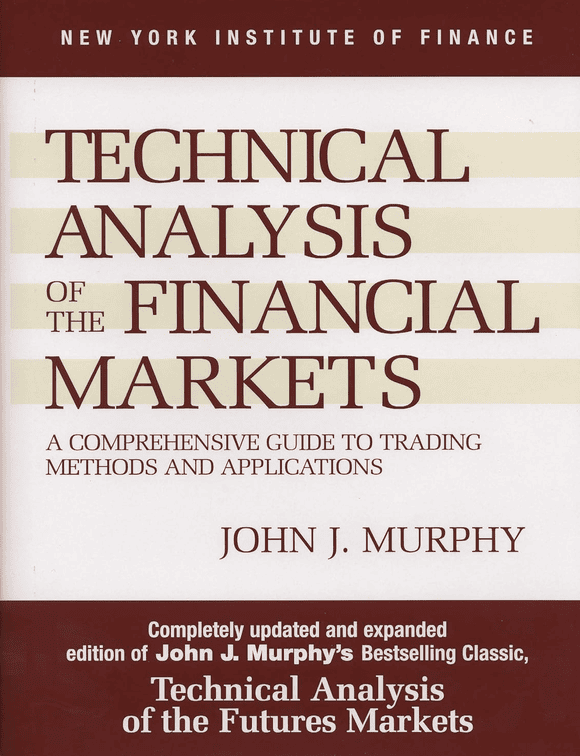
Learn the Fundamentals of Technical Analysis
John J. Murphy’s Technical Analysis of the Financial Markets covers charts, trends, indicators, candlesticks, intermarket relationships, and other core technical analysis concepts.
Price: $34.27–$35.50
View on Amazon →Backtest Your Trading Strategy
Before committing significant capital, determine whether your trading strategy has historically produced positive results.
Backtesting involves applying predefined trading rules to historical market data to measure how the strategy would have performed.
Suppose you analyze 200 historical trades and discover the following:
Example: Trading Strategy Backtest Results
Hypothetical performance across 200 historical trades.
| Metric | Example Result |
|---|---|
| Total Trades | 200 |
| Win Rate | 55% |
| Average Winning Trade | +8% |
| Average Losing Trade | −5% |
| Expected Return Per Trade | +2.15% |
Expected Return Formula
(Win Rate × Average Win) − (Loss Rate × Average Loss)
(0.55 × 8%) − (0.45 × 5%) = +2.15%
Key takeaway: A strategy doesn’t need a 90% win rate to be profitable. The relationship between average wins, average losses, and win rate determines mathematical expectancy. Results exclude trading fees, slippage, and taxes.
Despite winning only 55% of trades, this hypothetical strategy produces a positive mathematical expectancy.
Expected return = (Win rate × Average win) − (Loss rate × Average loss)
In this example, a trader allocating $2,000 per position would have an expected gross profit of $43 per trade, before fees, slippage, financing costs, and taxes.
Historical profitability doesn’t guarantee future results, but backtesting helps determine whether your trading strategy has merit before risking real money.

Create a Trading Business Plan
A trading business needs a business plan just like any other commercial operation. A formal business plan might seem boring compared to the high-octane price action you see on the stock market every day.
But it’s essential if you want to take day trading seriously.
Your business plan should outline your starting capital, trading strategy, expected expenses, risk tolerance, and financial objectives. A written business plan establishes boundaries and helps prevent emotional decision-making.
It should also explain how you’ll evaluate performance and when you’ll adjust your strategy.
Build Your Day Trading Business Plan
A successful trading business starts with a documented plan. Make sure yours covers these six essential components:
- ✓ Trading Strategy: Rules for entries, exits, position sizing, and risk management.
- ✓ Starting Capital: Available trading funds and minimum capital requirements.
- ✓ Financial Projections: Realistic expectations supported by backtesting and recorded performance.
- ✓ Operating Expenses: Brokerage fees, market data, software, equipment, and accounting costs.
- ✓ Compensation Structure: How often profits are withdrawn and how much capital stays invested.
- ✓ Risk Management: Drawdown limits, daily loss limits, and contingency plans.
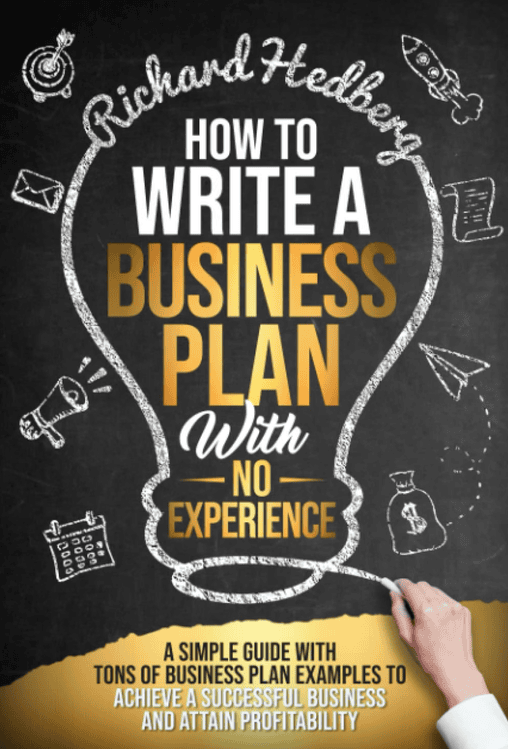
Take your trading business beyond a strategy. Learn how to create a structured business plan, develop financial projections, and set realistic business goals.
View Business Plan Guide on Amazon →As an Amazon Associate, we earn from qualifying purchases.
Set Up Your Brokerage Account and Trading Tools
Next, you’ll need the infrastructure to operate your trading business.
This generally includes a brokerage account, charting software, access to market data, a trading journal, as well as a good trading desktop computer or laptop.
Popular brokerage platforms include Interactive Brokers, Charles Schwab, and Fidelity, although account availability and trading restrictions depend on your country.
Depending on your strategy, you may also need real-time market data, an earnings calendar, stock screeners, and historical price data.
And lastly, although this guide isn’t meant to be focused on risk management…
Keep your trading capital separate from money needed for living expenses. A trading business should have sufficient financial reserves to withstand losing streaks without affecting personal obligations.

Understand Trading Business Taxes
Trading income can have different tax implications depending on your country, trading frequency, and whether your activities are classified as investing or carrying on a business.
In the United States, qualifying traders may be eligible for trader tax status, although trading frequently does not automatically establish eligibility.
In Canada, the Canada Revenue Agency evaluates several factors when determining whether securities transactions represent business income or capital gains.
These can include trading frequency, holding periods, market knowledge, time spent trading, and the nature of the transactions.

Take control of your business taxes. Learn about eligible deductions, recordkeeping, tax planning, and managing your small business finances with confidence.
View on Amazon →As an Amazon Associate, we earn from qualifying purchases.
Importantly, you don’t necessarily need to incorporate a company to operate a trading business.
Some traders operate individually, while others establish corporations for legal, administrative, or tax-planning reasons.
Consult a qualified tax professional before selecting a business structure or claiming trading-related expenses.
Track Every Trade and Measure Performance
A trading journal is one of the most important tools in a professional trading operation.
Record each trade’s entry price, exit price, position size, profit or loss, and the reason for entering the position.
5 Essential Trading Performance Metrics
Track these five statistics in your trading journal to evaluate profitability, risk, and the effectiveness of your trading strategy.
The percentage of completed trades that generate a profit.
The average profit on winning trades compared with the average loss on losing trades.
The greatest unrealized profit a position achieves while the trade is open.
The greatest unrealized loss a position experiences while the trade is open.
Total gross trading profits divided by total gross trading losses. A profit factor above 1.0 indicates gross profits exceed gross losses.
Why These Metrics Matter
A high win rate doesn’t automatically mean a strategy is profitable. By analyzing average gains, losses, MFE, MAE, and profit factor together, traders can identify whether their strategy has a measurable statistical advantage.
Key takeaway: Consistent profitability depends on the relationship between winning trades, losing trades, and risk management—not simply how often you’re right.
Over time, these statistics can reveal which setups perform best, whether your risk management rules are effective, and whether your strategy continues to produce positive expectancy.
Without accurate records, identifying these weaknesses becomes considerably more difficult.

Option Volatility and Pricing
A comprehensive guide to options pricing, volatility, trading strategies, and risk management. An excellent resource for traders looking to understand market volatility beyond simply predicting stock direction.
Check Price on Amazon →Affiliate disclosure: We may earn a commission from qualifying purchases at no additional cost to you.
Start Small and Scale Gradually
Once you’ve developed a strategy, tested its historical performance, and established your operating rules, begin with relatively small positions.
Personally, while backtesting my PEM strategy, I focus on taking only roughly $1000 positions, despite a stock’s price.
That means, if I’m trading a $5 stock, I trade no more than 200 shares, whereas if the stock is valued at $200, I trade no more than 5 shares.
The objective is to determine whether you can execute my strategy consistently under real market conditions.
I also strongly recommend new and developing traders use a simulated or “paper trading” account until they prove their edge is profitable over a large enough sample of independent trades.
Paper trading can help you practice, but actual trading introduces psychological pressures, execution delays, and transaction costs that simulations may not fully capture.
Once you can prove consistent profitability, you can then think about scaling position sizes to increase your overall P/L. Just remember that when you increase position sizes, you’ll increase both your gains AND potential losses per trade.
Consider increasing position sizes only after demonstrating consistent execution and acceptable risk-adjusted performance over a meaningful sample of trades.
Scaling an unproven strategy simply increases the amount of capital exposed to potential losses.

Conclusion: Treat Trading Like a Business
Starting a trading business doesn’t necessarily require an office, employees, or hundreds of thousands of dollars.
However, it does require discipline, adequate capital, a repeatable trading strategy, and a commitment to measuring results.
The objective isn’t to make money on every trade. It’s to execute a statistically sound process consistently enough that profitable outcomes can outweigh inevitable losses over time.
Build the strategy first. Validate the numbers. Manage your risk. Then focus on growing the business.
If you want to go deeper:
- Explore the Trading Statistics Hub to understand how different sectors behave across market cycles
- Study real setups inside the Trade Reviews section
- Learn the framework behind high-probability setups in the Post-Earnings Momentum Strategy
This is how you turn raw market data into repeatable trading edge.
More Trading Statistics…


Frequently Asked Questions About Starting a Trading Business
1. How Much Money Do You Need to Start a Trading Business?
You can technically start trading stocks with a few hundred dollars, but operating a sustainable trading business generally requires substantially more capital.
For example, a trader with a $10,000 account earning an average net return of 2% monthly would generate approximately $200 per month before personal taxes. A trader with $100,000 earning the same return would generate $2,000 monthly.
These returns are hypothetical, not guaranteed, and actual trading income can fluctuate significantly. Your required starting capital depends on your strategy, living expenses, risk tolerance, and financial goals.
2. Do You Need an LLC to Start a Trading Business?
No. You do not need to establish a limited liability company (LLC) to trade stocks professionally in the United States.
Many independent traders operate using personal brokerage accounts. However, establishing an LLC or another legal entity may provide administrative or business-planning benefits in certain circumstances.
An LLC does not automatically provide tax advantages, establish trader tax status, or protect trading capital from market losses.
Canadian traders can similarly trade individually without incorporating a business.
3. Can You Start a Trading Business From Home?
Yes. Most independent trading businesses can operate entirely from home.
You’ll generally need a reliable internet connection, a computer, brokerage account, charting platform, and access to relevant market data.
Unlike traditional businesses, trading operations typically don’t require commercial office space, physical inventory, or employees.
However, maintaining a dedicated workspace and consistent trading schedule can help establish professional operating habits.
4. Is Day Trading Considered a Business?
Day trading can qualify as a business, but the classification depends on applicable tax laws and individual circumstances.
In the United States, the IRS distinguishes between investors and traders carrying on a trade or business in securities. Trading frequency, continuity, regularity, and the intention to profit from short-term market movements can influence eligibility.
In Canada, the CRA considers factors such as transaction frequency, holding periods, market knowledge, and the nature of trading activities when distinguishing business income from capital gains.
Simply calling yourself a professional trader does not automatically establish business status for tax purposes.
5. Do You Need a Business License to Trade Stocks?
Generally, individuals trading stocks exclusively for their own accounts do not need a special trading business license.
However, requirements can change if you manage other people’s money, provide regulated investment advice, or execute trades on behalf of clients.
Depending on your jurisdiction and business structure, ordinary business registration or other administrative requirements may also apply.
Trading your own capital is fundamentally different from operating an investment advisory firm or brokerage.
6. Can You Write Off Trading Expenses?
Potentially. Traders whose activities qualify as carrying on a business may be able to deduct eligible business expenses, subject to applicable tax rules.
Depending on your jurisdiction and circumstances, deductible expenses might include:
- Market data subscriptions and charting software.
- Trading-related research tools.
- Accounting and bookkeeping services.
- Eligible computer equipment and office expenses.
- Certain professional education expenses.
In Canada, eligible business expenses must generally be reasonable and incurred to earn business income. In the United States, expense deductions depend partly on whether the taxpayer qualifies for trader tax status.
Personal investing expenses are not automatically deductible simply because they relate to stock trading.
7. How Do You Pay Yourself From a Trading Business?
Independent traders generally pay themselves by transferring available funds from their brokerage accounts into personal bank accounts.
However, these withdrawals are not necessarily equivalent to employment income or deductible business salaries.
For example, a sole proprietor generally reports business profits for tax purposes rather than treating personal withdrawals as deductible wages.
Traders operating through corporations may have additional options, including salaries or dividends, depending on their jurisdiction and corporate structure.
A sustainable withdrawal plan should account for trading losses, taxes, operating expenses, and capital needed to continue trading.
8. Can You Start a Trading Business With $5,000?
Yes, although a $5,000 trading account may be better suited to developing and validating a strategy than generating full-time income.
For example, risking 1% of a $5,000 account represents a maximum planned loss of $50 per trade.
Smaller accounts also face limitations involving transaction costs, diversification, position sizing, and certain brokerage restrictions.
In the United States, pattern day trading rules can restrict eligible margin-account activity, depending on the rules in effect and the account type.
Starting small can help traders develop consistent execution without exposing substantial capital.
9. How Much Can a Day Trading Business Make?
There is no guaranteed income from day trading.
Profitability depends on trading capital, strategy expectancy, execution quality, transaction costs, and market conditions.
Consider a hypothetical trader making 20 trades per month with $2,000 allocated to each position and an average expected return of 1% per trade.
That would represent approximately $400 in expected monthly gross trading profits.
However, expected returns are statistical averages rather than predictable monthly income. Actual results may include extended losing periods, and many individual traders lose money.
10. What Is the Best Business Structure for Day Trading?
The appropriate business structure depends on your country, trading activities, tax circumstances, and long-term objectives.
Common possibilities include operating individually, establishing a limited liability company in the United States, or incorporating a business in Canada.
For traders using only personal capital, operating individually may be the simplest starting point.
A corporation can introduce additional accounting requirements, administrative expenses, and tax considerations that may outweigh its potential benefits for smaller trading operations.
Consult an accountant familiar with active securities trading before establishing a separate legal entity.
11. How Do You Know Whether Your Trading Strategy Is Profitable?
A trading strategy demonstrates historical profitability when its net gains exceed its losses and trading costs over a representative sample of trades.
Important statistics include win rate, average winning trade, average losing trade, profit factor, maximum drawdown, and expected return per trade.
For example, a strategy winning 50% of trades with an average gain of 8% and an average loss of 4% has a theoretical expectancy of +2% per trade before costs.
However, backtesting should account for realistic execution, commissions, slippage, and potential selection bias.
A profitable historical backtest is evidence worth investigating, not proof of future profitability.
12. How Many Trades Do You Need to Backtest a Strategy?
There is no universal minimum number of trades required to validate a trading strategy.
A sample of 100 to 300 trades can provide useful preliminary information about win rates, average returns, and risk characteristics.
However, the reliability of those findings depends on the variability of returns, the strategy’s complexity, and whether the sample represents different market conditions.
A strategy tested across 300 highly similar trades may provide less reliable evidence than one tested across multiple market environments.
Whenever possible, traders should supplement historical backtesting with out-of-sample testing and forward testing.
13. What Is the Difference Between Trading as a Hobby and a Business?
The primary difference is the degree of organization, commercial intent, and consistency involved in the activity.
A professional trading operation generally follows documented strategies, maintains detailed records, establishes risk limits, and regularly evaluates financial performance.
A casual investor might purchase stocks occasionally without maintaining a formal trading system.
However, tax authorities use their own criteria to determine whether trading constitutes business activity. Maintaining a trading journal or business plan does not automatically change your tax classification.
14. Do You Need Separate Bank Accounts for a Trading Business?
A separate bank account may not be legally necessary for an individual trading exclusively with personal funds, but separating trading finances from household finances is generally good practice.
Separate accounts make it easier to track capital contributions, withdrawals, operating expenses, and trading profits.
If you establish a corporation or other separate legal entity, maintaining distinct financial accounts becomes particularly important for accounting and legal purposes.
15. Can You Run a Trading Business While Working Full-Time?
Yes. Many traders develop their strategies while maintaining regular employment or operating another business.
Some trading strategies require constant monitoring during market hours, while others involve placing trades at predetermined times and holding positions for several days or weeks.
For example, an earnings momentum strategy might focus on specific earnings announcements rather than requiring continuous market participation.
The key is selecting a strategy that fits your schedule without compromising execution or risk management.
16. What Is the Biggest Mistake When Starting a Trading Business?
One of the biggest mistakes is committing substantial capital before establishing whether a trading strategy has positive expectancy.
Other common problems include excessive position sizing, abandoning exit rules, overtrading, and failing to track performance.
A trader can have a historically profitable strategy and still lose money through inconsistent execution.
A successful trading business depends on more than finding profitable opportunities. It requires applying the same rules consistently, controlling losses, and maintaining sufficient capital to withstand inevitable drawdowns.


Leave a Reply