

Learn how to trade stock options with this beginner-friendly guide covering call and put options, popular trading strategies, pricing, and risk management. Discover how options trading works, why understanding implied volatility and time decay is essential, and how traders can combine technical analysis with earnings fundamentals to identify potential trading opportunities. We’ll also explore how options provide leverage, and recommend an educational resource for developing more advanced trading strategies.

Stock options offer traders an opportunity to profit from rising and falling stock prices without purchasing or short-selling shares directly. They can also provide significant leverage, allowing relatively small investments to generate substantial percentage returns.
But leverage cuts both ways.
A 2026 study published in the Review of Finance found that retail options traders suffered average losses of 5–9% around earnings announcements, with losses reaching 10–14% around high-expected-volatility announcements.
Why?
Because successfully predicting a stock’s direction is only part of the equation. Options traders must also understand pricing, volatility, expiration dates, and risk management.
This guide explains how stock options work, introduces common trading strategies, and explores how options can be used to trade post-earnings momentum.
Quick Answer: How to trade stock options for beginners?
To trade stock options, open an options-approved brokerage account, select a stock, and decide whether to buy call options (bullish) or put options (bearish). Next, choose a strike price, expiration date, and contract based on your market outlook and risk tolerance. One standard U.S. stock options contract typically represents 100 shares. For example, an option priced at $2.50 per share costs $250 per contract. Purchased options can generate leveraged returns, but you risk losing 100% of the premium paid if the trade doesn’t work out.
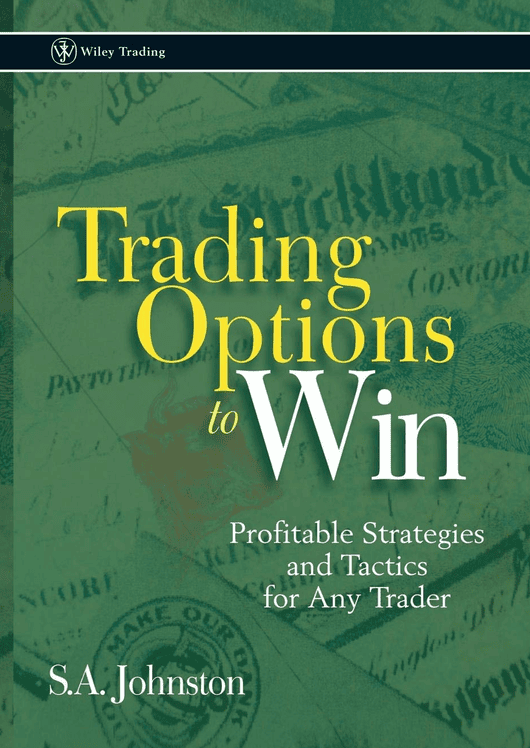
Explore options trading and hedging strategies for managing bullish and bearish market exposure.
View on Amazon →Call Options vs. Put Options: What’s the Difference?
Stock options come in two primary varieties: calls and puts.
Call options give buyers the right, but not the obligation, to purchase shares at a predetermined price, while put options provide the right to sell shares. Traders typically buy calls when they expect a stock’s price to rise and puts when they anticipate a decline.
For example, if a stock trades at $100, a trader might purchase a call option with a $105 strike price expecting the stock to climb above that level. Alternatively, a bearish trader might purchase a put option with a $95 strike price, anticipating a selloff.
However, the stock moving beyond the strike price doesn’t automatically guarantee a profit. Traders must also account for the option’s premium, expiration date, and changing volatility.
Call Options vs. Put Options
| Feature | Call Option | Put Option |
|---|---|---|
| Directional outlook for buyer | Bullish | Bearish |
| Buyer’s right | Buy shares | Sell shares |
| Benefits from | Rising stock prices | Falling stock prices |
| Maximum loss when purchased | Premium paid | Premium paid |
Note: Comparisons apply to buying call and put options, not selling uncovered options. Transaction costs are excluded.
Understanding that calls are generally bullish and that puts are generally bearish is easy enough.
However, both types of options contracts are far more complicated than that and both have premiums that must be considered when calculating profitability.
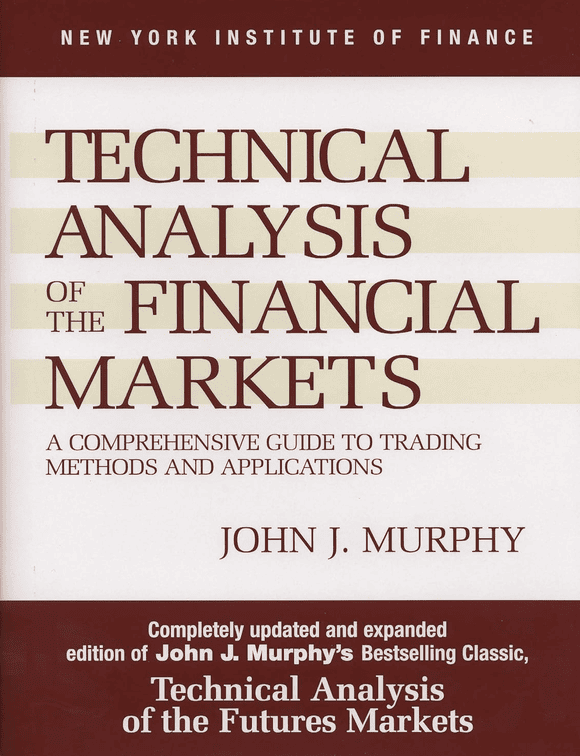
Learn the Fundamentals of Technical Analysis
John J. Murphy’s Technical Analysis of the Financial Markets covers charts, trends, indicators, candlesticks, intermarket relationships, and other core technical analysis concepts.
Price: $34.27–$35.50
View on Amazon →Common Stock Options Trading Strategies
Options offer considerably more flexibility than simply betting on whether a stock will rise or fall.
Depending on their objectives, traders can use options to speculate on price movements, generate income from existing holdings, hedge against potential losses, or build strategies with predefined risk and reward.
However, not every options strategy is appropriate for beginners.
Some involve purchasing a single contract, while others require owning shares or simultaneously buying and selling multiple contracts. The table below compares five common options trading strategies, their objectives, and the risks involved.
5 Common Stock Options Strategies
Compare trading objectives, potential benefits, and key risks.
Long Calls
Buy call options expecting the underlying stock to rise. Offers leveraged upside without purchasing 100 shares outright.
Long Puts
Buy put options expecting the stock to fall. Allows traders to benefit from declining prices without short-selling shares.
Covered Calls
Sell call options against shares already owned to collect premiums, while accepting a cap on potential upside.
Protective Puts
Buy put options against existing stock holdings to establish a downside floor through expiration.
Vertical Spreads
Buy and sell options of the same type and expiration at different strike prices to create a defined-risk position.
Note: Risk descriptions are simplified and exclude transaction costs. Covered calls and protective puts involve stock ownership. Spreads may carry assignment and execution risks.
Each strategy has different capital requirements, risk characteristics, and sensitivity to time decay and implied volatility.
For example, purchasing a call might seem straightforward, but an expensive premium can turn a correct market prediction into an unprofitable trade.
Understanding how options are priced is just as important as choosing the right strategy.
Explore options trading and hedging strategies for managing bullish and bearish market exposure.
View on Amazon →What Are the Risks of Trading Stock Options?
Unlike ordinary stock trading, options involve additional variables that affect profitability.
4 Major Risks of Trading Stock Options
Understanding these risks is essential before trading with real capital.
Time Decay (Theta)
Options generally lose time value as expiration approaches, even if the underlying stock price remains unchanged, all else equal.
Implied Volatility (IV)
Elevated IV increases option premiums. A sudden drop in IV can reduce an option’s value even when the stock moves in the expected direction.
Leverage
Small stock-price movements can generate disproportionately large percentage gains or losses on an options position.
Expiration
If a purchased option expires worthless, the trader loses 100% of the premium paid, regardless of earlier price movements.
Key Takeaway: You can correctly predict a stock’s direction and still lose money trading its options. Pricing, volatility, and timing matter just as much as direction.
Risk examples primarily concern purchased options. Selling uncovered options can involve substantially greater losses.
Buying options limits losses to the premium paid, but selling uncovered options can involve substantially greater risks, including theoretically unlimited losses on naked calls.
Understanding these variables is essential before trading options with real capital.
Option Volatility and Pricing: A Book Every Serious Options Trader Should Consider
One of the most important lessons in options trading is that predicting direction isn’t enough. Traders must also understand whether an option is appropriately priced.

That’s where Option Volatility and Pricing: Advanced Trading Strategies and Techniques, 2nd Edition by Sheldon Natenberg becomes particularly valuable.
Originally developed for serious options traders, Natenberg’s comprehensive guide explains how professionals evaluate contracts, manage risk, and develop strategies around changing market conditions.
Rather than focusing exclusively on directional predictions, the book explores the mechanics underlying options prices.
What Will You Learn From Option Volatility and Pricing?
Six essential areas covered in Sheldon Natenberg’s second edition.
Options Theory & Pricing Models
Understand how options contracts are valued and how pricing models work.
Volatility Analysis
Evaluate implied and historical volatility and their influence on option premiums.
Directional & Volatility Strategies
Select strategies based on expected price movements and volatility conditions.
Risk Analysis
Identify, measure, and manage the risks associated with options positions.
Dynamic Hedging
Learn how traders adjust positions as prices, volatility, and market conditions change.
Position Management
Explore how professional traders monitor, evaluate, and manage options portfolios.
The Big Lesson: Options trading isn’t just about predicting stock direction. Understanding pricing, volatility, and risk is essential to developing informed trading strategies.

Affiliate link — We may earn a commission from qualifying purchases.
Is Option Volatility and Pricing Worth Reading?
For traders who already understand basic calls and puts, it’s an excellent resource for developing a deeper understanding of options.
However, it’s a technical book, not a quick introduction to trading.
Beginners may need to familiarize themselves with options terminology before tackling the more advanced chapters.
Our verdict: If you’re serious about developing options trading strategies rather than simply gambling on short-term price movements, Natenberg’s book deserves consideration.
Option Volatility and Pricing
Advanced Trading Strategies and Techniques, 2nd Edition
By Sheldon Natenberg
A comprehensive guide to understanding how professional options traders evaluate volatility, price contracts, structure strategies, and manage risk. Particularly valuable for developing traders who want to move beyond simply predicting stock direction.
✓ Pros
- Detailed explanations of options pricing and volatility
- Explores professional trading and hedging techniques
- Strong emphasis on risk and position management
- Covers directional and volatility-based strategies
- Useful long-term reference for developing traders
✗ Cons
- Technical material may overwhelm complete beginners
- Requires time and effort to understand the concepts
- Not designed as a step-by-step brokerage tutorial
- Advanced strategies require additional practice
- Not focused specifically on earnings momentum trading
PTJ Verdict: Understanding stock direction is only half the battle. Natenberg’s book helps traders understand the equally important challenges of option pricing, volatility, and risk. An excellent educational investment for anyone serious about advancing beyond basic calls and puts.
Affiliate disclosure: We may earn a commission from qualifying purchases at no additional cost to you.
Can You Trade Post-Earnings Momentum Using Stock Options?
Absolutely. However, there’s an important catch. Our post-earnings momentum (PEM) research focuses on identifying substantial stock-price movements following earnings announcements.
Options can potentially amplify the returns from these movements, but their pricing introduces additional challenges.

For example, imagine correctly predicting a 13% post-earnings stock rally, like the one shown in the Brinkers International chart above.
You purchase a call option expecting to profit from the increase. Unfortunately, the contract was already expensive because implied volatility was elevated.
Following earnings, implied volatility collapses, reducing the option’s time value.
In this case, you may have correctly predicted the stock’s direction but still lost money.
This phenomenon, commonly called IV crush, illustrates why understanding options pricing matters. Being wrong about volatility is also one of the reasons why most new options traders will lose money.
Trading options after the earnings announcement may avoid some pre-announcement volatility exposure, but it doesn’t eliminate pricing, liquidity, or time-decay risks.
Learn the Fundamentals of Technical Analysis
John J. Murphy’s Technical Analysis of the Financial Markets covers charts, trends, indicators, candlesticks, intermarket relationships, and other core technical analysis concepts.
Price: $34.27–$35.50
View on Amazon →Final Thoughts: Learn the Market Before Leveraging Your Trades
Stock options can provide powerful trading opportunities, particularly during major earnings-driven price movements.
However, understanding technical analysis, company fundamentals, earnings expectations, and stock-price behavior is only the beginning.
Successful options trading also requires a thorough understanding of volatility, pricing, expiration, and position management.
For traders ready to move beyond basic calls and puts, Sheldon Natenberg’s Option Volatility and Pricing provides a comprehensive foundation for studying these concepts.
Before using options to leverage your next trading setup, learn how those options are priced.


If you want to go deeper:
- Explore the Trading Statistics Hub to understand how different sectors behave across market cycles
- Study real setups inside the Trade Reviews section
- Learn the framework behind high-probability setups in the Post-Earnings Momentum Strategy
This is how you turn raw market data into repeatable trading edge.


Leave a Reply