

In this guide, you’ll learn 4 ways to go long and short on the same stock, including using separate brokerage accounts, options trading strategies, and reversing positions to capitalize on changing market momentum. We’ll examine broker restrictions, hedging costs, margin requirements, and the risks of protective puts and collars, alongside real-world AFRM and RDDT case studies from Paper Trading Journal’s original research.

Most traders and investors understand the basic principle of long stock trading:
You buy shares when you expect prices to rise and sell them when you anticipate a decline.
However, what if you want to profit from both directions or protect an existing investment against a potential downturn?
Can you be long and short on the same stock at the same time?
The answer, unfortunately, isn’t straightforward, and mostly depends on your brokerage, account structure, and trading strategy.
Below, we’ll explain whether you can hold long and short positions in the same stock, which brokers support different approaches, and the costs, benefits, and risks involved.
Quick Answer: Can You Hold a Long and Short Position at the Same Time?
Yes, there are ways to hold both long and short exposure to the same stock simultaneously, but most retail brokers don’t allow both stock positions within a single account. Unless it’s part of planned trading strategy, it’s also often an inefficient hedge. For example, if you own 100 shares of a $50 stock ($5,000 long) and short another 100 shares at $50 ($5,000 short), a 10% price increase would generate a $500 gain on the long position and a $500 loss on the short position, resulting in $0 combined profit before expenses. In other words, after slippage and fees, you’d mostly likely lose money by doing this. Still, traders may accomplish this using separate eligible brokerage accounts or alternative hedging strategies, such as protective put options. That said, hedging strategies are not beginner trading strategies and the risk of serious financial losses is very real.
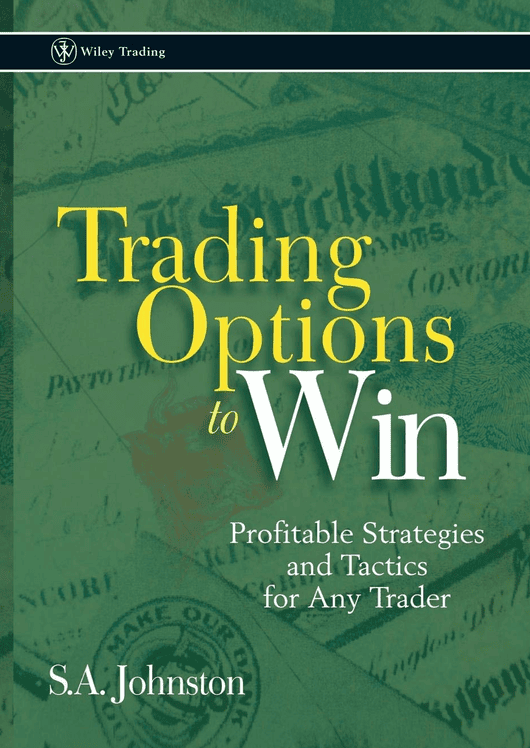
Explore options trading and hedging strategies for managing bullish and bearish market exposure.
View on Amazon →What Does It Mean to Be Long and Short on the Same Stock?
Being long and short on the same stock means holding two opposing positions in a company’s shares. A long position profits when the stock price increases, while a short position profits when the price declines.
In some cases, experienced traders may use combined long and short positions to hedge against potential losses, reduce market exposure, or manage uncertainty about a stock’s future direction.
Long vs. Short vs. Holding Both
See how 100 shares purchased or shorted at $50 perform when the stock moves 20% in either direction.
Long Position
Buy 100 shares at $50, investing $5,000.
Stock rises 20% to $60
Gross profit
Stock falls 20% to $40
Gross loss
Short Position
Borrow and sell 100 shares at $50, establishing a $5,000 short.
Stock falls 20% to $40
Gross profit
Stock rises 20% to $60
Gross loss
Long + Short Together
Hold 100 shares long and 100 shares short at $50.
Stock moves 20% either way
−$1,000 on the other
Combined directional P/L
Before expenses
This relationship between a trader’s simultaneous long and short position is known as net market exposure, which measures the difference between an investor’s long and short positions.
In the example above, holding $5,000 long and $5,000 short produces $0 in net directional exposure at entry, even though the trader maintains $10,000 in gross exposure.
The biggest issue with going long and short at the same time, however, is that zero net exposure does not mean zero risk or zero cost.
Stock borrowing fees, margin requirements, dividends, and trading expenses can still affect the combined position’s profitability. Additionally, if a trader closes one side of the hedge, the remaining position becomes exposed to future price movements.
What Does $0 Net Exposure Actually Mean?
4 Ways to Trade Long and Short on the Same Stock
There are several ways to establish bullish and bearish exposure to the same stock, although not every strategy involves simultaneously owning and shorting shares.
Some approaches hedge an existing investment against losses, while others involve changing a position from long to short (or vice versa) to capitalize on price movements in both directions.
Hold Long and Short Positions in Separate Brokerage Accounts
One approach is to purchase shares through one brokerage account while shorting an equivalent number of shares through another.
For example, a trader could hold 100 shares of a $50 stock in one brokerage account and short 100 shares at $50 in another, creating $10,000 in gross exposure but $0 in net directional exposure.
This strategy can temporarily neutralize price movements without selling the original investment.
However, stock borrowing fees, margin requirements, and potential tax consequences can make maintaining both positions expensive. Each broker also manages its own collateral and liquidation requirements.
Pros & Cons: Separate Brokerage Accounts
Offsets price movements without selling existing shares. Holding $5,000 long and $5,000 short creates $0 net directional exposure.
Borrowing fees, margin requirements, and tax consequences can increase costs. Separate brokers may also liquidate positions independently.
Bottom line: A matched long and short position can reduce directional risk, but neutral exposure doesn’t mean zero costs or zero risk.
Hedge a Long Stock Position With Put Options
A protective put allows investors to maintain ownership of their shares while limiting potential downside losses. Unlike short selling, purchasing a put option provides the right, but not the obligation, to sell shares at a predetermined strike price before expiration.
For example, an investor holding 100 shares at $50 could purchase one put contract with a $45 strike price.
This generally establishes a maximum stock-and-put loss of $500 plus the option premium, assuming the put covers all 100 shares and remains effective through the intended holding period.
The primary disadvantage is the premium paid for protection, which reduces overall returns.
Explore options trading and hedging strategies for managing bullish and bearish market exposure.
View on Amazon →Combine Stock Ownership With a Collar Strategy
A collar combines three positions: owning 100 shares, purchasing one protective put, and selling one covered call. This creates a defined range of potential outcomes, limiting downside losses while placing a ceiling on potential gains.
For example, an investor holding a $50 stock could purchase a $45 put and sell a $55 call with matching expiration dates. Ignoring option premiums, the strategy limits the stock’s potential loss to approximately 10% while capping its upside at approximately 10%.
Actual returns depend on the premiums received and paid, transaction costs, and the investor’s original purchase price.
Pros & Cons: Stock + Options Collar
Limits downside risk while reducing hedging costs. A $45 put protects 100 shares bought at $50, while the premium from selling a $55 call helps offset the put’s cost.
Caps potential stock gains at $500 (10%) before net premiums and fees. The short call also introduces early assignment risk, and protection expires.
Bottom line: A $45 put and $55 call on 100 shares purchased at $50 establish an approximate -$500 to +$500 payoff range at expiration, before premiums and expenses. The trade-off for downside protection is limited upside potential.
Close One Position and Reverse Your Trading Direction
Instead of maintaining opposing positions simultaneously, traders can close a long position and open a short position, or vice versa, when technical or fundamental conditions change.
For example, a trader who purchases 100 shares at $50 and sells them at $55 realizes a $500 profit (10%).
If the stock subsequently shows bearish momentum, the trader could open a new short position at $55 and cover at $50, generating another $500 gross profit.
Together, the two trades would produce $1,000 before expenses, although identifying both entry and exit opportunities in real time is considerably more difficult than observing them afterward.

This approach is particularly relevant to post-earnings momentum trading, where unexpected earnings results and changing market sentiment can create significant price movements in both directions.
However, unlike hedging, reversing a position requires traders to make separate timing decisions, each carrying the risk of losses.
The Problems With Being Long & Short Simultaneously
Although holding opposing positions reduces directional exposure, it also eliminates potential profits from favorable price movements when both positions are equally sized.
Meanwhile, borrowing fees, margin requirements, and other expenses can make maintaining both positions costly.
Stock Borrowing Fees Reduce Profitability
Short selling involves borrowing shares, often at a variable annualized rate. For example, shorting $10,000 worth of stock at an 8% annual borrow rate costs approximately $67 over 30 days, assuming a constant position value and a 360-day calculation. Hard-to-borrow stocks may carry substantially higher fees.
Margin Requirements and Forced Liquidations
Separate brokerage accounts maintain independent margin requirements, even when their positions offset each other. If a $10,000 short position increases 30% in value, the trader faces a $3,000 unrealized loss in that account, potentially triggering a margin call or forced liquidation despite an equivalent gain elsewhere.
Borrow Recalls Can Disrupt the Hedge
Brokers may recall borrowed shares or require short positions to be closed when borrowing availability changes. If this happens, the remaining long position becomes exposed to future price movements, potentially undermining the original hedge.
Explore options trading and hedging strategies for managing bullish and bearish market exposure.
View on Amazon →Unexpected Tax Consequences
Under U.S. constructive sale rules, shorting stock against substantially identical appreciated shares can trigger capital gains recognition. For example, an investor who purchased 100 shares at $50 and hedges them at $100 could potentially recognize a $5,000 taxable gain, subject to applicable exceptions.
Ultimately, holding equal-sized long and short positions primarily manages directional risk rather than generating trading profits.
Traders seeking opportunities in both directions may find sequential long and short trades more suitable, although accurately timing those trades introduces additional risk.
What Does It Cost to Hold Both Positions?
Holding simultaneous long and short positions can generate expenses even when their price movements cancel each other out.
Short selling introduces borrowing fees, financing considerations, and trading costs that ordinary cash-funded stock purchases may not incur.
| Expense | How It Affects Your Returns |
|---|---|
| Stock borrow fees | Annualized borrowing charges that generally accrue daily. |
| Margin interest | May apply to borrowed cash or margin debit balances. |
| Commissions & spreads | Transaction expenses when opening and closing positions. |
| Dividend payments | Short sellers may owe payments in lieu of dividends. |
| Options premiums | Apply when purchasing options as an alternative hedge. |
For example, shorting $10,000 of stock at an 8% annual borrowing rate costs approximately $66.67 over 30 days, assuming a constant borrowed value and a 360-day calculation.
At a 25% borrowing rate, that expense increases to $208.33 over the same period, before commissions, spreads, and other costs.
According to Interactive Brokers, short-selling costs depend on the stock’s borrowing rate and any interest credited on short-sale proceeds. Hard-to-borrow stocks may carry substantially higher fees, making some hedging strategies particularly expensive.
What Does It Cost to Short $10,000?
Estimated borrowing expenses over 30 days, assuming a constant $10,000 position value.
Illustrative calculation: $10,000 × annual rate × 30/360. Actual fees vary with borrowing rates, share values, broker policies, financing credits, and other expenses.
Is Simultaneously Going Long and Short Actually Beneficial?
There are legitimate reasons to hold simultaneous long and short positions, particularly for experienced investors looking to hedge investments, reduce market exposure, or manage risk during uncertain conditions.
For example, an investor holding $20,000 in stock could theoretically establish an equivalent $20,000 short position to offset future price movements. But this also eliminates potential directional profits while introducing borrowing fees, margin requirements, and other expenses.
Ultimately, simultaneously going long and short is rarely the most practical strategy for generating trading profits.
Simpler alternatives, such as protective puts or closing an existing position and reversing, may achieve similar objectives with less complexity.
Beginners and developing traders should generally avoid this approach.
Understanding position sizing, risk management, and consistent entry and exit strategies is far more important than attempting complex hedging techniques.
Long & Short Hedging: Benefits vs. Limitations
PTJ Takeaway: Hedging can reduce directional risk, but lower exposure doesn’t guarantee lower total costs. For newer traders, simpler risk-management methods are generally easier to understand and maintain.
Explore options trading and hedging strategies for managing bullish and bearish market exposure.
View on Amazon →Can You Profit From Going Long and Short on the Same Stock at Different Times?
Yes, traders can potentially profit from both bullish and bearish price movements in the same stock without holding opposing positions simultaneously.
However, doing so requires identifying separate entry opportunities, confirming momentum shifts, and managing risk when market conditions change.
According to the PTJ database containing more than 212 post-earnings momentum setups, 80 (37.7%) exhibited some form of price reversal during the following trading session.
These included stocks that reversed immediately and others that initially continued in their original direction before changing course.
Two notable examples include Affirm Holdings (AFRM) and Reddit (RDDT), which we’ll examine in detail below.
AFRM Case Study: From Bullish Momentum to a Multi-Day Short Opportunity
Following its fiscal Q4 2026 earnings report, Affirm Holdings (AFRM) initially presented a strong bullish setup. The company beat EPS expectations by 45.45%, reported 33% year-over-year revenue growth, and issued guidance above analyst expectations.
Technically, AFRM gained 8.02% during its first hourly earnings candle, breaking above hourly resistance but failing to confirm four-hour and daily breakouts.
From the initial long entry, the stock continued climbing, eventually reaching a 7.95% maximum favorable excursion (MFE).

However, momentum quickly deteriorated. AFRM formed a bearish shooting-star candle, broke below its 9-period EMA, and subsequently fell beneath the entire 6-9-12 EMA cloud. By the following session’s close, the original long setup had reversed to a 7.10% loss.
This reversal created a potential short-selling opportunity. Depending on entry timing, the bearish setup offered 6.22% to 9.34% downside MFE during the initial reversal.
Two days later, AFRM had fallen as much as approximately 18% below the reversal area, presenting a potential multi-day short trade.

The key takeaway: AFRM demonstrated how a stock can offer nearly 8% upside before reversing into a substantial bearish move. However, profiting from both directions required recognizing the failed long setup, confirming the bearish reversal, and managing two separate trades rather than holding opposing positions simultaneously.
RDDT Case Study: From Bearish Earnings Momentum to a 20% Bullish Reversal
Following its July 2026 earnings report, Reddit (RDDT) delivered exceptionally strong fundamentals, including 61.10% year-over-year revenue growth, an 8.04% revenue beat, and raised forward guidance.
Despite these results, the stock initially sold off sharply.
RDDT declined 8.05% during its first hourly earnings candle, breaking below hourly support and creating a bearish momentum setup.
Although the four-hour and daily breakdowns weren’t confirmed, the initial short trade produced a 17.55% maximum favorable excursion (MFE) with 0.00% recorded adverse excursion from the hourly-close entry.
By the following session’s close, the short setup had generated a 14.23% favorable price movement. However, the stock eventually found support and began reversing higher, creating a potential opportunity for traders looking to switch from bearish to bullish exposure.
Within just two trading days, RDDT rallied nearly 20% from its post-earnings intraday low. With revenue growth exceeding 60% and bullish guidance still intact, the reversal presented a potential longer-term buying opportunity as buyers regained control.

The key takeaway: RDDT demonstrated how one earnings report could produce a 17.55% downside opportunity followed by a nearly 20% bullish rebound. Capturing both moves would have required separate entries, technical confirmation, and effective risk management rather than simultaneously holding long and short positions.
Conclusion: Is It Better to Hedge a Position or Reverse Your Trade?
Ultimately, whether you should hedge a position or reverse your trade depends on your investment objectives, trading strategy, and risk tolerance.
Both approaches have legitimate applications, but simultaneously holding long and short positions is rarely as straightforward as buying shares in one account and shorting them in another.
As our AFRM and RDDT case studies demonstrate, trading both directions at different times can create substantial profit opportunities.
However, capturing these movements requires technical confirmation, disciplined risk management, and the ability to recognize when an original trading thesis is no longer valid.
Ultimately, for traders or investors considering these strategies, understanding the risks and mechanics of options trading is essential.
As with anything in trading, master the fundamentals, build your own data, study relentlessly, and let the evidence guide your decisions, not your emotions.
Explore options trading and hedging strategies for managing bullish and bearish market exposure.
View on Amazon →If you want to go deeper:
- Explore the Trading Statistics Hub to understand how different sectors behave across market cycles
- Study real setups inside the Trade Reviews section
- Learn the framework behind high-probability setups in the Post-Earnings Momentum Strategy
This is how you turn raw market data into repeatable trading edge.


Frequently Asked Questions About Long and Short Stock Trading
Has Warren Buffett Ever Shorted a Stock?
Yes, Warren Buffett has acknowledged short selling earlier in his investing career, including a short position connected to an arbitrage trade in 1954. However, Buffett has generally avoided short selling because of its theoretically unlimited losses. At Berkshire Hathaway’s 2001 annual meeting, he explained why shorting an overvalued stock can remain risky even when the original valuation analysis eventually proves correct.
Can I Be Long and Short on the Same Stock?
Yes, but most retail brokerage accounts don’t allow simultaneous long and short stock positions in the same security. For example, holding 100 shares long and 100 shares short at $50 creates $10,000 in gross exposure but $0 in net directional exposure at entry. Separate eligible accounts or certain options strategies may allow traders to establish opposing exposure.
Can I Go Long and Short at the Same Time?
Yes, depending on your brokerage, account structure, and financial instruments. Traders might maintain $5,000 in long stock exposure and $3,000 in short exposure, resulting in $2,000 in net long exposure at entry. However, brokers often net opposing stock transactions within a single account, making separate accounts or options-based hedging necessary.
Can You Long and Short the Same Stock on Robinhood?
Robinhood supports stock short selling for eligible U.S. margin accounts, but it doesn’t support simultaneous boxed stock positions within the same account. Selling 100 shares when you already own 100 shares generally closes your long position rather than creating a separate short. Short-selling eligibility, share availability, and margin requirements also apply.
Can You Hold Long and Short Positions Simultaneously on Interactive Brokers?
No, Interactive Brokers does not permit simultaneous long and short stock positions in the same security within one account. If you own 100 shares and sell 150, the transaction would close your original 100-share long position and establish a 50-share short position, assuming short selling is permitted and the order executes.
Can You Long and Short the Same Stock Using Two Brokerage Accounts?
Yes, separate eligible brokerage accounts may allow opposing positions in the same stock, subject to broker restrictions. For example, holding $10,000 long at one brokerage and $10,000 short at another creates approximately $0 in combined directional exposure initially. However, both accounts maintain independent margin requirements, and U.S. constructive-sale tax rules may apply.
Do You Need a Margin Account to Short Stocks?
Yes, traditional U.S. stock short selling generally requires an approved margin account. FINRA rules typically require at least $2,000 in minimum account equity for margin trading, although brokers may impose higher requirements. A $10,000 short position can also require substantial additional collateral, and borrowing fees apply independently of margin interest.
Can You Buy and Short the Same Stock in One Day?
Yes, traders can buy a stock, close the position, and subsequently short it during the same trading day, provided their brokerage permits short selling. For example, buying 100 shares at $50 and selling at $52 generates a $200 gross profit. Shorting 100 shares at $52 and covering at $49 generates another $300, totaling $500 before trading expenses. U.S. day-trading and margin requirements may apply.
Is Shorting Against the Box Legal?
Yes, shorting against the box is generally legal in the United States, although brokers may restrict it and certain arrangements can trigger tax consequences. Under Internal Revenue Code Section 1259, shorting substantially identical appreciated stock may result in a constructive sale. For example, hedging 100 shares purchased at $50 when they reach $80 could potentially trigger recognition of a $3,000 gain, subject to applicable exceptions.
Can You Make Money Holding Equal Long and Short Positions?
Not from subsequent directional price movements alone when both positions remain perfectly matched. Holding 100 shares long and 100 shares short at $50 creates offsetting gains and losses as the stock moves. A 15% increase produces a $750 long-side gain and a $750 short-side loss, leaving $0 combined directional profit before borrowing fees, dividends, financing, and other expenses.
Is Buying Put Options Better Than Shorting a Stock?
Protective puts may be preferable for investors seeking downside protection while retaining upside potential, although they require an upfront premium. For example, owning 100 shares purchased at $50 and buying a $45 put for $2 per share creates a maximum combined downside loss of approximately $700 through expiration, excluding commissions and assuming the put remains effective.
Can You Profit From Both Bullish and Bearish Momentum in the Same Stock?
Yes, by opening separate trades as market conditions change rather than holding both directions simultaneously. PTJ’s original AFRM research documented a 7.95% favorable move from an initial long setup before a bearish reversal, while RDDT produced a 17.55% favorable move for short sellers followed by a nearly 20% recovery from its subsequent low. These historical movements demonstrate potential opportunities, not guaranteed profits from two executed trades.
References
CNBC. (2001, April 28). Afternoon session: 2001 Berkshire Hathaway annual meeting [Video and transcript]. https://buffett.cnbc.com/video/2001/04/28/afternoon-session—2001-berkshire-hathaway-annual-meeting.html
Financial Industry Regulatory Authority. (2021). Rule 4210: Margin requirements, minimum equity interpretation. https://www.finra.org/sites/default/files/2021-07/regulatory-notice-21-24-attachment.pdf
Interactive Brokers. (n.d.). Introduction to hedging. IBKR Campus. https://www.interactivebrokers.com/campus/trading-lessons/introduction-to-hedging/
Interactive Brokers. (2025, September 16). The risks of shorting series, part IV: Borrow fees and voluntary corporate actions. https://www.interactivebrokers.com/campus/traders-insight/securities/short-selling/the-risks-of-shorting-series-part-iv-borrow-fees-and-voluntary-corporate-actions/
Internal Revenue Service. (n.d.). Internal Revenue Manual, Section 21.6.4: Tax computation/accounting period changes. https://www.irs.gov/irm/part21/irm_21-006-004r
Laforest, J. (2026, August 4). RDDT case study: Why bullish earnings can creat both a perfect short and long opportunity. The Paper Trading Journal. https://papertradingjournal.com/2026/08/04/rddt-case-study/
Laforest, J. (2026, August 31). AFRM case study: How to trade post-earnings momentum reversals. The Paper Trading Journal. https://papertradingjournal.com/2026/08/31/afrm-case-study/
Options Industry Council. (n.d.). Collar (protective collar). https://prd-web.optionseducation.org/strategies/all-strategies/collar-protective-collar
Options Industry Council. (n.d.). Protective put (married put). https://www.optionseducation.org/strategies/all-strategies/protective-put-married-put
Robinhood. (n.d.). Short selling. https://robinhood.com/us/en/support/articles/short-selling/
Robinhood. (n.d.). What’s the total maintenance requirement? https://robinhood.com/us/en/support/articles/margin-maintenance/


Leave a Reply