

In this review of Stock Market Rules by Michael D. Sheimo you’ll learn what he gets right about common Wall Street sayings, where some of these so-called rules can fall apart, and whether the book is worth reading for new and developing traders. I’ll also explain why I think its biggest lesson is that stock market “rules” are better treated as tendencies and ideas to test rather than guarantees you should blindly follow.

Michael D. Sheimo’s Stock Market Rules: The 50 Most Widely Held Investment Axioms Explained, Examined, and Exposed sets out to examine 50 of the most commonly repeated sayings, beliefs, and supposed “rules” of Wall Street.
That premise alone makes this book useful for newer traders.
The stock market is filled with sayings that sound authoritative, such as buy low and sell high, don’t fight the Fed, buy the stock that splits, there is always a bull market somewhere.
These all sound great, and are true much of the time… but the big issue I take with them is that:
There are no hard and fast rules in trading.
And ironically, that may be one of the most important lessons you can take away from a book called Stock Market Rules.

Stock Market Rules, Fourth Edition
Author: Michael D. Sheimo
Paperback: $16.05 USD
A beginner-friendly introduction to 50 of Wall Street’s best-known investing and trading axioms.
Market Rules Aren’t Laws
One of Sheimo’s rules is that “It’s Always a Bull Market.”
There is some truth behind the idea. Over sufficiently long periods, the broader stock market has historically had an upward bias. Companies grow, economies expand, productivity increases, and investors generally expect to be compensated for putting capital at risk.
But interpreting that as “buy any stock and hold it long enough” can be disastrous.
Individual companies fail. Stock can sell off even when reporting good earnings. Entire industries fall out of favor. Markets experience deep corrections, crashes, and prolonged bear markets.

Even an investment that eventually recovers can suffer a drawdown large enough to permanently alter an investor’s financial plans.
Trading amplifies that problem… In my own post-earnings momentum trading research, I’ve seen how easily a strong trade can reverse. A stock can surge after earnings, offer a substantial unrealized profit, and then rapidly give it back.
That’s why I don’t think traders should interpret any market tendency as a guarantee. It’s better to set a profit target, define your stop loss, and determine how much you’re willing to lose before entering any trade or investment.
Otherwise, what begins as an ordinary losing trade can turn into a catastrophe.
What I Like — and Don’t Like
✓ Pros
- Introduces dozens of important market concepts
- Questions conventional Wall Street wisdom
- Easy to read without an advanced finance background
- Useful foundation for newer traders and investors
✗ Cons
- No single rule will make you profitable
- Some concepts are more useful than others
- Experienced traders may already know much of the material
- Risk management still has to come from the trader
My take: Use the rules as ideas to investigate, not commandments to follow.
A Surprisingly Broad Introduction to the Stock Market
Where Stock Market Rules succeeds particularly well is breadth.
Sheimo touches on concepts including seasonality, diversification, short squeezes, stock splits, market psychology, unexpected external shocks, and historical market tendencies.
None of these topics receives the kind of exhaustive treatment you’d expect from a dedicated book on technical analysis, fundamental analysis, or risk management.
And that’s okay. For a new or developing trader, simply learning that these concepts exist is valuable.
Take stock splits as an example.
One of Sheimo’s examined rules is “Buy the Stock That Splits.” He walks through the mechanics of stock splits and ultimately concludes that a split by itself isn’t a legitimate reason to buy a stock.
That’s exactly the kind of critical thinking new investors need.
Something happening to a stock does not automatically make it bullish or bearish.
You need to understand why the market might care about it.
The same goes for seasonal tendencies such as the Santa Claus rally.
Historically recurring patterns can be useful information, but a tendency is not a guarantee.
Who Is This Book Best For?
Best suited for:
- New stock market investors
- Beginner and developing traders
- Readers learning common Wall Street terminology
- Anyone who wants to challenge popular investing sayings instead of blindly following them
Less useful for: Experienced traders looking for a complete trading system or a highly technical strategy manual.
Paperback price: $16.05 USD
Did This Book Change My Trading Strategy?
No, this book definitely didn’t help me build my strategy or figure out day trading. But I don’t think that should be the standard used to judge Stock Market Rules.
I remember reading this book and thinking it contained genuinely useful material. It didn’t suddenly produce a profitable trading strategy for me, and I wouldn’t expect it to do that for anyone else.
What it did was help reinforce a collection of concepts that I still think about today.
That matters becoming a consistently profitable trader is rarely the result of discovering one secret indicator, one setup, or one magical market rule.
It comes from gradually building an understanding of how markets behave, testing ideas, managing risk, collecting data, and figuring out what actually works for you.
Books like Stock Market Rules can help build that foundation.
Want to Learn the Rules Before You Break Them?
Michael D. Sheimo examines 50 of Wall Street’s most repeated investment axioms and asks a more useful question: Do they actually work?
Paperback: $16.05 USD
Final Verdict – Stock Market Rules by Michael D. Sheimo
I recommend Stock Market Rules most strongly to newer traders and investors who are still building their understanding of how markets work.
Just don’t read the title too literally. There are patterns. There are tendencies. There are historical relationships. There are principles that can help tilt probabilities in your favor.
But there are very few genuine “rules.”
A profitable trader needs to know the difference.
Use Sheimo’s 50 axioms as starting points for understanding the market rather than guarantees about what happens next, and this book becomes much more valuable.
For around $16, I think it’s an inexpensive way for a developing trader to gain exposure to dozens of ideas they’ll continue encountering throughout their trading career.


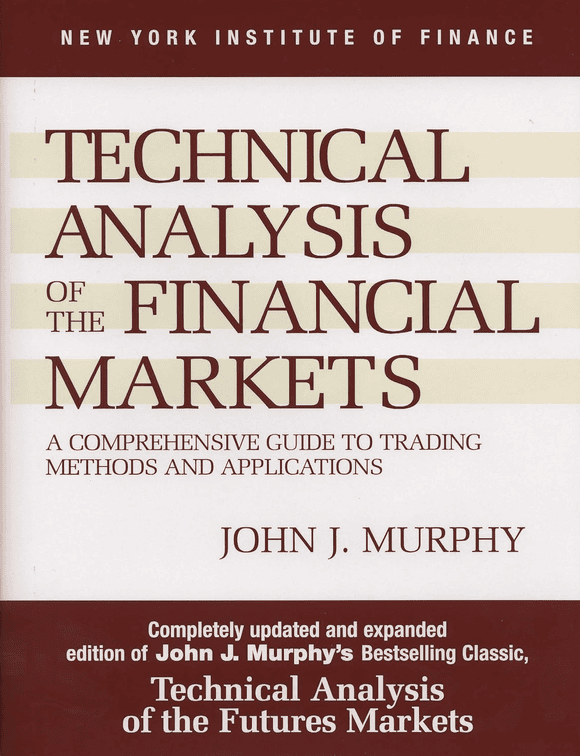
Learn the Fundamentals of Technical Analysis
John J. Murphy’s Technical Analysis of the Financial Markets covers charts, trends, indicators, candlesticks, intermarket relationships, and other core technical analysis concepts.
Price: $34.27–$35.50
View on Amazon →Frequently Asked Questions About Stock Market Rules
What is Stock Market Rules by Michael D. Sheimo about?
Stock Market Rules: The 50 Most Widely Held Investment Axioms Explained, Examined, and Exposed examines 50 common beliefs, sayings, and supposed rules used by stock market traders and investors. Michael D. Sheimo looks at the reasoning behind each rule and considers whether it is actually supported by market behavior.
The book covers topics including stock splits, diversification, short squeezes, seasonality, market rallies, unexpected market shocks, and investor psychology.
Who is Michael D. Sheimo?
Michael D. Sheimo is an author known for writing about financial markets, investing, and trading. In Stock Market Rules, Sheimo focuses on the conventional wisdom traders frequently encounter and explains why some market rules are useful while others should be questioned.
His writing is particularly accessible to newer traders and investors who are still developing their understanding of how stock markets behave.
What are stock market rules?
Stock market rules are commonly repeated principles, observations, and trading axioms that investors use to describe market behavior.
Examples include sayings about buying during market declines, seasonal rallies, stock splits, diversification, bull markets, and investor sentiment.
However, traders should remember that most stock market rules are better understood as historical tendencies or guidelines rather than guarantees. Market conditions change, and even patterns that have worked repeatedly in the past can fail.
Are there really rules in the stock market?
There are very few absolute rules in the stock market.
Markets are influenced by earnings, economic conditions, interest rates, investor psychology, unexpected news, liquidity, and countless other variables. Because of this, a trading rule that works in one environment may perform poorly in another.
For active traders, risk management is generally more important than assuming a particular stock market rule will always work.
Is Stock Market Rules good for beginners?
Yes. Stock Market Rules is particularly useful for beginner and developing traders because it introduces a wide range of important stock market concepts without requiring an advanced background in finance.
It can help newer investors become familiar with ideas such as seasonality, short squeezes, diversification, stock splits, market sentiment, and historical market tendencies.
More experienced traders may already be familiar with many of the concepts discussed.
Will Stock Market Rules teach me how to trade stocks?
Not exactly.
The book provides useful market knowledge, but it is not a complete trading system. It does not give readers a single strategy that can simply be followed to produce consistent profits.
Instead, Stock Market Rules is better viewed as foundational reading that can help traders understand the ideas, assumptions, and tendencies they will encounter while developing their own strategies.
What is the most important stock market rule?
There is no universally accepted single most important stock market rule.
For active traders, however, one of the most important principles is to define risk before entering a trade. That means deciding where you will take a profit, where you will exit if the trade moves against you, and how much of your trading capital you are willing to risk.
Without defined risk, even a relatively small losing trade can grow into a much larger loss.
Are stock market rules always reliable?
No. Stock market rules are not always reliable, and they should never be treated as guarantees.
Seasonal patterns, technical setups, market cycles, and historical tendencies can provide useful information, but unexpected events can quickly change market conditions.
The better approach is to understand why a particular stock market rule might work, test whether it applies to your strategy, and always use appropriate risk management.
Is Stock Market Rules worth reading?
For new and developing traders, I think Stock Market Rules is worth reading.
It probably won’t completely change the way you trade, but it provides a broad introduction to dozens of concepts that traders will encounter throughout their careers. More importantly, it encourages readers to question popular Wall Street wisdom rather than blindly accepting every market saying as fact.
That makes it a useful addition to a beginner trader’s reading list.


Leave a Reply