
In this guide to the best day trading books for beginners, we break down five books that cover the core skills new traders need to understand, including risk management, trading psychology, candlestick analysis, discipline, strategy development, and the practical mechanics of day trading. You’ll see what each book is best suited for, the main pros and cons, and which one may make the most sense depending on whether you want to improve your chart reading, mindset, or overall trading process.

If you want to learn how to day trade, books are one of the cheapest places to start.
A $20 or $30 trading book can expose you to risk management, chart reading, trading psychology, market structure, and common beginner mistakes before you start learning those lessons with real money.
No book is going to magically turn someone into a profitable trader.
But reading several different perspectives can help you build a much stronger foundation and figure out what kind of trader you actually want to become.
Below are five of the best day trading books for beginners that cover everything from the basic mechanics of trading to candlestick charts, trading psychology, and building a repeatable process.
Quick Answer: Can You Make $1,000 a Day With Day Trading?
Yes, it is mathematically possible to make $1,000 in a day from day trading, but doing it consistently is much harder. A $1,000 gain equals 1% on a $100,000 account, 2% on $50,000, or 10% on $10,000, which shows how dramatically account size changes the challenge. If your goal is eventually to make $1,000 a day, the smarter starting point is to study the craft seriously by reading trading books, learning risk management, understanding market structure, practicing position sizing, and testing repeatable setups before focusing on a daily income target.
The Ultimate Day Trading Playbook
Best for: A straightforward introduction to day trading

The Ultimate Day Trading Playbook is a good starting point for someone who is still trying to understand what day trading actually involves.
Rather than immediately jumping into complicated indicators and advanced strategies, the book focuses on the foundations a new trader needs to begin developing a structured approach.
That includes trading basics, managing risk, developing the right mindset, and understanding how different pieces of a trading strategy fit together.
I particularly like books like this for complete beginners because trading can become overwhelming very quickly.
You start researching one candlestick pattern and suddenly you are reading about VWAP, Level II data, liquidity, options gamma, short squeezes, and twelve different moving averages.

If you’re serious about learning day trading, start by building a foundation in risk management, strategy, discipline, and trading psychology. This beginner-friendly book is an affordable place to start before putting real money on the line.
How to Day Trade for a Living by Andrew Aziz
Best for: Learning the practical mechanics of day trading

Andrew Aziz’s How to Day Trade for a Living has become one of the better-known introductory trading books in the retail day trading world.
Its biggest strength is that it looks at trading as more than simply finding a stock that might go up. The book gets into the broader process surrounding a trade, including trading tools, tactics, money management, discipline, and psychology.
That distinction matters… Beginners naturally spend most of their time searching for entries. They want perfect chart patterns, indicator, scanner, or setup.
But a trading strategy is really a collection of decisions involving what to trade, when to enter, how much to risk, when to exit, and how to respond when something doesn’t work.
Risk management and discipline are therefore every bit as important as chart analysis.
This is the type of book I would read early in the learning process and then revisit after actually spending some time paper trading.
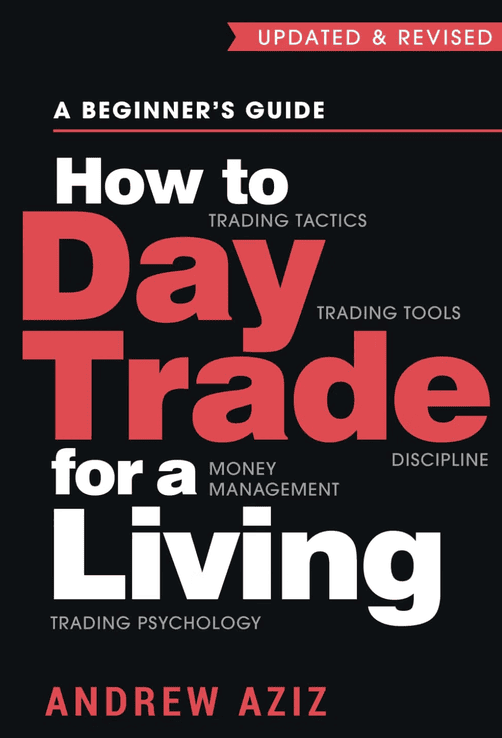
This is a solid starter book for traders who want to better understand trading tools, money management, discipline, and psychology. If you’re serious about learning how to day trade, books like this can help you build a stronger foundation before risking real money.
How to Day Trade: The Plain Truth by Ross Cameron
Best for: Understanding what day trading is really like

One thing beginners desperately need is realistic context.
Day trading can look unbelievably easy from the outside. You see screenshots of massive winners, traders sitting in front of six monitors, and social media clips showing someone supposedly making thousands of dollars before breakfast.
How to Day Trade: The Plain Truth by Ross Cameron approaches the subject from the perspective of someone who has spent years actively trading and teaching trading.
For a beginner, that kind of perspective can be useful because learning trading is not simply about memorizing chart patterns.
You also have to understand volatility, losses, emotional pressure, execution, and the enormous difference between recognizing a setup afterward and actually trading it while money is moving.
Books written by active traders can also expose beginners to the routines and thought processes that surround the actual trade.
Even if you eventually develop a completely different trading style, seeing how another trader structures their process can help you begin thinking systematically about your own.

Ross Cameron’s The Plain Truth is a good pick for beginners who want a more realistic look at what day trading actually involves. It helps move the conversation beyond flashy profit screenshots and toward the process, discipline, risk, and realities of active trading.
The Candlestick Trading Bible
Best for: Learning how to read charts and candlestick patterns

Candlestick charts are one of the first things almost every new trader encounters.
Green candle. Red candle. Wick. Body. Engulfing pattern. Doji. Hammer.
It looks simple at first, but those candles contain a surprising amount of information about what buyers and sellers were doing during a particular period.
The Candlestick Trading Bible is aimed more specifically at traders who want to develop their understanding of candlestick patterns and technical chart analysis.
I would not recommend treating candlestick patterns as magical buy and sell signals.
But The Candlestick Trading Bible still is a great book for learning the basics of candlestick charts and understanding the predictive value on different types of price action.
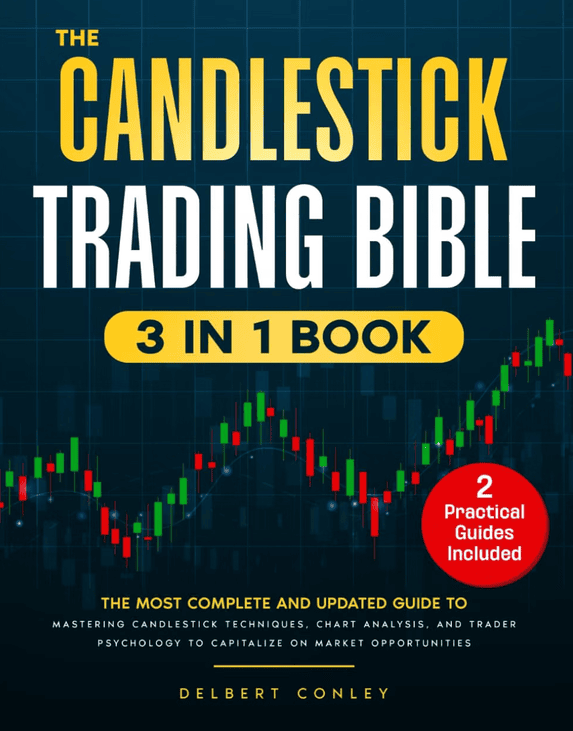
If you’re still learning how to read price charts, The Candlestick Trading Bible can help you build a stronger understanding of candlestick patterns, price action, and market behavior. It’s a useful next step for beginners who want to move beyond simply recognizing red and green candles and start understanding what price action may be communicating.
The Mental Game of Trading by Jared Tendler
Best for: Trading psychology and discipline

You can understand charts perfectly and still be terrible at trading.
That’s what makes The Mental Game of Trading such an important addition to a beginner’s trading bookshelf.
Jared Tendler focuses on psychological problems including greed, fear, anger, confidence, and discipline, all of which can become incredibly destructive when money is involved.
This becomes more important than many beginners expect.
You can have a perfectly reasonable strategy and destroy it by doubling your position size after a loss. You can turn a manageable losing trade into a disaster because you refuse to exit. You can take profits far too early because you’re afraid of losing them, then chase another trade five minutes later because you’re frustrated.
Those aren’t chart problems. They’re behavioral problems.
The Mental Game of Trading by Jared Tendler tackles exactly that and helps developing trading come to terms with the greed, fear, anger, confidence, and discpline that go hand-in-hand with day trading.
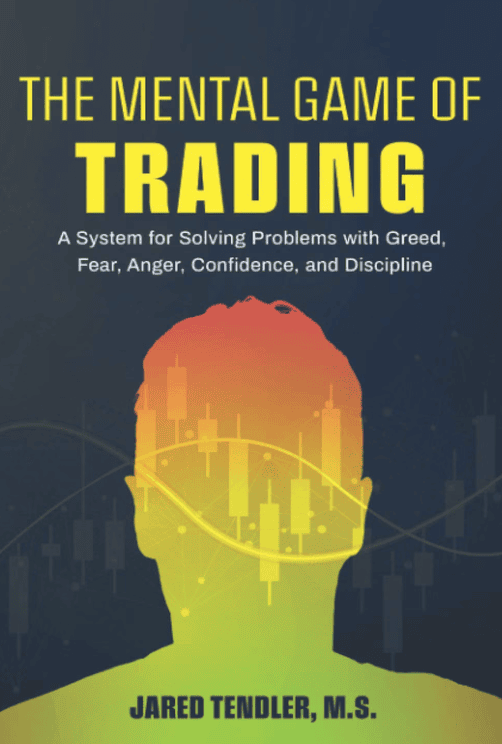
You can have a solid strategy and still sabotage it with fear, greed, overtrading, revenge trading, or poor discipline. Jared Tendler’s The Mental Game of Trading focuses on the psychological side of performance and is a strong choice for traders who want to better understand and control the emotions behind their decisions.
Which Day Trading Book Should a Beginner Read First?
If you are completely new to trading, I would start with a few general day trading books before diving deeply into specialized subjects.
Something like The Ultimate Day Trading Playbook or How to Day Trade for a Living can provide the initial framework. From there, you can expand into candlestick analysis, market structure, strategy development, and trading psychology.
And I wouldn’t necessarily stop after one book.
Different traders explain the same concepts differently.
Reading three, four, or five trading books can help you identify recurring lessons about risk management, discipline, patience, and execution while also exposing you to different approaches.
Final Thoughts: Trading Books Are Cheap Compared With Trading Losses
A beginner can easily lose hundreds or thousands of dollars trying to figure out day trading through trial and error.
By comparison, spending $20 to $40 on a trading book is pretty cheap tuition.
Books won’t eliminate losses, hand you a guaranteed strategy, or make you profitable overnight.
What they can do is shorten the learning curve, introduce concepts you didn’t know existed, challenge bad assumptions, and help you approach trading as a skill that needs to be studied rather than a casino game.
If you’re serious about learning how to day trade, my suggestion is simple:
Build a small trading library. Read. Paper trade. Track your results. Test what you learn.
Then let the data tell you what actually works for you.


If you want to go deeper:
- Explore the Trading Statistics Hub to understand how different sectors behave across market cycles
- Study real setups inside the Trade Reviews section
- Learn the framework behind high-probability setups in the Post-Earnings Momentum Strategy
This is how you turn raw market data into repeatable trading edge.
More Trading Statistics…


Frequently Asked Questions (FAQ)
What is the best day trading book for beginners?
For a complete beginner, a broad introductory book is usually the best place to start. Books such as The Ultimate Day Trading Playbook or How to Day Trade for a Living cover several core areas at once, including trading mechanics, risk management, discipline, psychology, and strategy. After that, you can move into more specialized books on candlestick analysis, market structure, or trading psychology.
Can you learn day trading from books?
Books can teach you a huge amount about risk management, chart reading, market behavior, psychology, trading setups, and execution, but reading alone is not enough. The best approach is to combine books with paper trading, chart review, journaling, and testing strategies against historical trades. Books give you the framework, while practice helps you understand whether you can actually apply those ideas consistently.
How many trading books should a beginner read?
There is no magic number, but reading three to five solid trading books is a good starting point. Different authors explain the same concepts in different ways, which can help important lessons stick. You may also notice recurring themes such as position sizing, discipline, risk management, and avoiding emotional decisions. Those repeated lessons are often more valuable than discovering another complicated indicator.
Should beginners read trading psychology books?
Absolutely. Trading psychology is worth studying from the beginning rather than waiting until problems appear. Fear, greed, revenge trading, overconfidence, hesitation, and oversized positions can destroy an otherwise reasonable strategy. A book such as The Mental Game of Trading can help traders understand why they make poor decisions under pressure and develop a more systematic approach to controlling those behaviors.
What should I learn first before day trading?
Beginners should understand risk management, position sizing, order types, liquidity, stop losses, risk-to-reward, volatility, and basic chart reading before worrying about advanced strategies. You should also understand exactly how much money you can lose on a trade. Learning to control downside risk is generally more important than trying to find the perfect entry signal.
Are candlestick books useful for beginner traders?
Yes, because candlestick charts are one of the most common ways traders visualize price action. A book such as The Candlestick Trading Bible can help beginners understand candle bodies, wicks, common patterns, and how price behaves around key areas. However, candlestick patterns should generally be viewed in context alongside volume, trends, catalysts, support, resistance, and overall market conditions.
Is How to Day Trade for a Living good for beginners?
How to Day Trade for a Living is aimed specifically at newer traders and covers topics beyond simply choosing entries. It discusses trading tools, tactics, money management, discipline, and trading psychology. That makes it useful for someone trying to understand what an actual trading process looks like rather than simply memorizing technical patterns or searching for quick buy and sell signals.
Is The Mental Game of Trading only for experienced traders?
No. In fact, beginners may benefit from learning about trading psychology before developing bad habits. Emotional decisions can appear almost immediately once real money is involved. Understanding concepts such as fear, greed, frustration, revenge trading, and confidence early can make it easier to recognize those behaviors later when you start paper trading or eventually transition to live trading.
Can reading trading books make you profitable?
No book can guarantee profitability. Trading books can improve your knowledge, introduce better risk-management practices, expose common mistakes, and help you think more systematically about markets. Profitability still depends on factors such as strategy quality, execution, discipline, position sizing, costs, market conditions, and consistency. The value of books is in improving your education, not providing a guaranteed path to income.
Can you make $1,000 a day from day trading?
It is mathematically possible, but consistently earning $1,000 every trading day is much harder than producing a single $1,000 winning day. The required return depends heavily on account size. Someone serious about reaching that level should focus first on education, risk management, studying trading books, testing strategies, and building consistency rather than immediately targeting a fixed daily dollar amount.
How much money do you need to start day trading?
There is no single amount that works for everyone. The appropriate starting capital depends on the market you trade, your broker, regulations, strategy, and risk tolerance. Beginners can often learn much of the process through paper trading before risking meaningful capital. Starting smaller can also make it easier to focus on execution rather than becoming overwhelmed by large dollar swings.
Should I paper trade while reading trading books?
Yes. Paper trading gives you a way to experiment with ideas from books without immediately risking real money. You can test entry rules, stop placement, position sizing, and trade management while keeping records of your results. It also helps reveal the difference between understanding a trading concept intellectually and actually following the rules when a chart is moving in real time.
What is the best trading book for learning charts?
A book focused specifically on candlestick analysis, such as The Candlestick Trading Bible, can be useful for beginners learning how to interpret price charts. It can help you understand common candlestick formations and basic price-action concepts. From there, you can expand into topics such as volume, market structure, support and resistance, moving averages, and trading catalysts.
What is the best trading book for psychology?
The Mental Game of Trading by Jared Tendler focuses specifically on psychological problems traders commonly face, including fear, greed, anger, confidence, and discipline. It is particularly useful for traders who find themselves breaking rules, chasing trades, taking revenge trades, hesitating on valid setups, or changing position size based on recent wins and losses.
Are expensive trading courses better than books?
Not necessarily. A higher price does not automatically mean better information. Many fundamental trading concepts can be learned from books costing $15 to $40, reputable educational resources, and hands-on practice. Before spending hundreds or thousands of dollars on a course, it can make sense to build a basic understanding through books so you have a better idea of what information you actually need.
Should I read one trading book at a time?
Usually, yes. Reading one book, taking notes, and testing the concepts can be more useful than rapidly consuming ten books without applying anything. Trading education becomes much more valuable when you turn ideas into measurable rules. After finishing a book, try identifying two or three concepts worth testing rather than immediately moving on to another strategy.
How long does it take to learn day trading?
There is no fixed timeline. Learning terminology and basic chart concepts may take weeks, while developing a repeatable process and becoming consistently disciplined can take much longer. Markets constantly change, so trading education is an ongoing process. Reading books, reviewing charts, paper trading, collecting data, and maintaining a journal can all help make that learning process more structured.
Do professional traders still read trading books?
Many experienced traders continue studying throughout their careers because markets, technology, strategies, and their own behavior continue to evolve. At that stage, books may become less about learning basic definitions and more about refining psychology, risk management, market structure, execution, statistics, or specialized trading techniques. Trading is one of those subjects where there is always another layer to explore.
Are trading books worth the money?
For most beginners, they can be one of the cheaper forms of trading education. Spending $20 to $40 on a useful book is relatively inexpensive compared with the losses that can result from poor position sizing, weak risk management, or trading without a plan. The important part is actually applying what you learn instead of treating reading as a substitute for testing and practice.
What should I do after finishing a day trading book?
Take the most useful concepts and turn them into something measurable. Define a setup, create entry and exit rules, decide how you will manage risk, and then paper trade or backtest the idea. Keep records of the results. The goal is not simply to finish more books. It is to gradually convert useful information into a repeatable, testable trading process.


Leave a Reply