

Thinking about opening an LLC as a day trader? This guide breaks down the $35–$500+ registration costs, potential $1,000+ annual operating expenses, IRS trader tax status requirements, and possible tax advantages of establishing a trading business. We’ll also compare how LLC expenses affect traders with $10,000, $25,000, and $100,000 accounts, explain the differences between investors and professional traders, and explore why developing a consistently profitable, backtested trading strategy may be more important than registering a business in the first place.

Imagine starting a day trading business with $10,000, only to discover you need a 10% annual return just to cover the cost of operating your LLC.
That’s the reality for a trader spending $1,000 annually on business administration, accounting, and compliance costs. And that’s before trading commissions, paying yourself, taxes, or a single losing trade.
The good news?
You don’t need $100,000, employees, or a Bloomberg terminal to establish an LLC as a day trader. And in some U.S. states, filing fees for an LLC start as low as $35.
But here’s the catch:
Forming an LLC doesn’t automatically qualify you for tax advantages, protect your trading account from market losses, or make you a professional trader in the eyes of the IRS.
So, when does opening an LLC actually make financial sense for a day trader?
Let’s break down the real costs, potential tax benefits, and why developing a consistently profitable trading strategy should be your first priority—not your business registration.
Quick Answer: Can a day trader be an LLC?
Yes, you can open an LLC as a day trader in the United States, even as a single-member business. State filing fees typically range from $35 to $500+, while annual administrative, accounting, and compliance costs can exceed $1,000. For a trader with a $10,000 account, that’s equivalent to a 10% annual return just to cover business overhead. However, forming an LLC doesn’t automatically reduce your taxes, qualify you for IRS trader tax status, or protect your trading capital from market losses. Before incorporating your trading activities, consider your account size, trading frequency, tax obligations, and operating expenses. Most importantly, you’ll need a consistently profitable, data-backed trading strategy with measurable risk management. After all, an LLC can help structure a trading business, but it can’t turn an unprofitable trading strategy into a profitable one.

Learn how to start, run, and grow your first LLC, from business formation and legal requirements to finances and daily operations.
View on Amazon →As an Amazon Associate, we earn from qualifying purchases.
How Much Does It Cost to Open an LLC for Day Trading?
An LLC is relatively inexpensive to establish, but the ongoing costs can add up, especially for traders operating smaller accounts.
The costs and fees listed below are, of course, just illustrative U.S. costs. Actual requirements vary considerably by state, and some fees are mandatory while others are optional.
How Much Does a Day Trading LLC Cost?
Estimated U.S. formation and operating expenses
| Expense | Estimated Cost |
|---|---|
| State LLC filing fee | $35–$500+ |
| Registered agent | $0–$300/year |
| Annual state fees/reports | $0–$800+ |
| Bookkeeping & tax preparation | $300–$2,000+/year |
| EIN from IRS | FREE |
Estimates vary by state, service provider, and tax complexity. Some costs are optional. Figures exclude trading fees and taxes.
Consider a trader operating a $10,000 account.
If their LLC costs $1,000 annually to maintain, they must earn a 10% annual return just to cover the entity’s overhead, before accounting for trading commissions, spreads, slippage, and taxes.
That’s a significant disadvantage before placing a single trade.
Does an LLC Reduce Day Trading Taxes?
Operating an LLC can reduce day trading taxes, but NOT automatically. A single-member LLC is generally treated as a disregarded entity for federal income tax purposes unless it elects another classification.
This means forming an LLC doesn’t, by itself, change the federal tax treatment of your trading gains and losses. More importantly, the IRS distinguishes between someone who invests in securities and someone who qualifies as a trader in securities.
Investor vs. Trader: How the IRS Decides
The IRS looks at your actual trading activity, not whether you’ve registered an LLC.
Investor
- Primary goal: Long-term appreciation, dividends, or interest income.
- Holding period: Often weeks, months, or years.
- Trading activity: May be occasional or frequent, but doesn’t qualify as a trading business.
- Tax treatment: Capital gains and losses, generally reported on Schedule D.
- Section 475(f): Not eligible for the trader mark-to-market election.
Trader in Securities
- Primary goal: Profit from short-term, daily market price movements.
- Holding period: Typically short, assessed alongside other factors.
- Trading activity: Must be substantial, continuous, and regular.
- Tax treatment: Qualifying business expenses generally reported on Schedule C.
- Section 475(f): May elect mark-to-market accounting if eligible and deadlines are met.
Source: IRS Topic No. 429 — Traders in Securities . General educational comparison; individual tax circumstances vary.
Qualifying for trader tax status generally requires substantial, regular, and continuous trading activity aimed at profiting from short-term market movements.
There is no universal minimum number of trades that guarantees qualification.
Eligible traders may be able to deduct ordinary and necessary trading business expenses. Some can also elect mark-to-market treatment under Section 475(f), subject to strict rules and deadlines.
The important distinction: Trader tax status depends on the activity, not simply whether an LLC exists.

Take control of your business taxes. Learn about eligible deductions, recordkeeping, tax planning, and managing your small business finances with confidence.
View on Amazon →As an Amazon Associate, we earn from qualifying purchases.
Is an LLC Worth It for a $10,000, $25,000, or $100,000 Trading Account?
For traders with $10,000 or $25,000 accounts, opening an LLC may not be worthwhile. Meanwhile, for a trader operating a $100,000 account, those same expenses represent just 1% of trading capital, making an LLC potentially more practical.
However, account size alone doesn’t justify incorporation—consistent profitability, tax considerations, and actual business needs matter more.
Consider three hypothetical traders, each earning a 15% annual gross return and spending $1,000 on annual LLC administration.
Is an LLC Worth the Cost?
Hypothetical 15% annual trading return with $1,000 in LLC operating expenses.
| Trading Capital | 15% Gross Profit | After $1,000 Overhead |
|---|---|---|
| $10,000 | $1,500 | $500 |
| $25,000 | $3,750 | $2,750 |
| $100,000 | $15,000 | $14,000 |
Illustrative figures only. Assumes a 15% annual return before LLC overhead. Excludes taxes, trading fees, and slippage. Actual trading returns may be negative.
For the $10,000 trader, LLC overhead consumes 66.7% of gross trading profits. For the $100,000 trader, it consumes just 6.7%. That’s a HUGE difference in operating requirements and costs.
This doesn’t mean larger traders automatically benefit from forming an LLC. But it does mean fixed administrative costs become proportionally less burdensome as trading capital increases.
There’s another misconception worth addressing:
An LLC doesn’t necessarily protect your personal trading capital from market losses. Limited liability generally concerns qualifying business obligations, not losses incurred on the company’s own investments.

Learn the essentials of business planning, finances, taxes, and running your own business.
As an Amazon Associate, we earn from qualifying purchases. Prices may vary.
Before Opening an LLC – Build a Trading Strategy That Actually Works
You can spend $500 registering an LLC, $1,000 annually maintaining it, and thousands funding a trading account. But none of that matters if your trading strategy consistently loses money.
An LLC won’t turn an unprofitable trader into a profitable one.
Before incorporating, focus on developing and backtesting a strategy with positive expectancy, defined entry and exit rules, and measurable risk-to-reward ratios.
Most trading guides tell you to “develop a profitable strategy” without showing you how.
Learn the Fundamentals of Technical Analysis
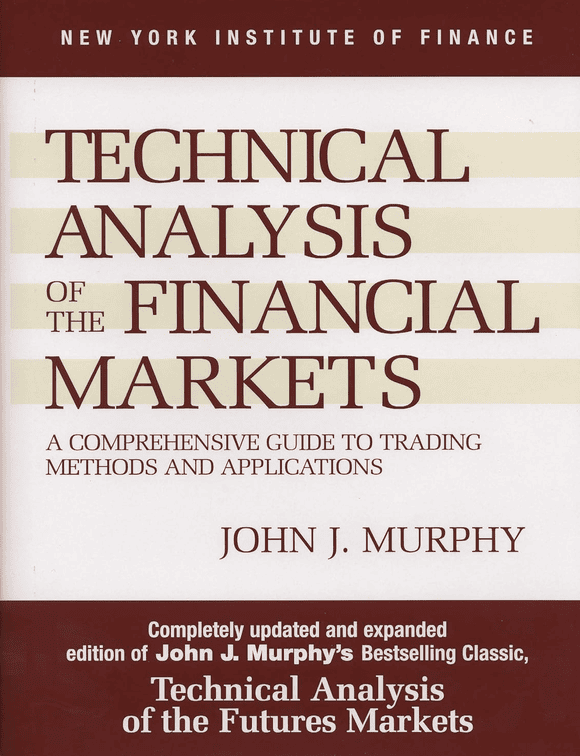
John J. Murphy’s Technical Analysis of the Financial Markets covers charts, trends, indicators, candlesticks, intermarket relationships, and other core technical analysis concepts.
Price: $34.27–$35.50
View on Amazon →At Paper Trading Journal, we’re doing exactly that—developing a momentum trading strategy by trading, documenting, and analyzing hundreds of historical earnings setups.
While this strategy is NOT your key to financial freedom, understanding how we’ve been developing out strategy can help you developing your own trading strategy with a defined edge.
Here’s how our PEM strategy works:
Our Post-Earnings Momentum Strategy
PEM Framework | Rules-Based Trading
Educational research framework, not a guarantee of profitability. A 15% stop on a $1,000 position represents $150 in planned risk; actual losses may exceed this due to gaps, slippage, or execution.
The best part about this strategy, at least in my opinion, is that it doesn’t really matter what the broader market is doing. These setups work both long and short, and occur quite frequently throughout earnings season.
Here’s a quick look at a recent long setup that occurred after Block Inc ($XYZ) reported better-than-expected earnings and strong revenue growth.

XYZ stock initial surged about 5% higher in the 1-hour following the earnings report. Then, it proceeded to rally another +9.54% between the close of the hourly earnings candle and the EOD closing price.
Similarly, we’ve often documented HUGE PEM setups on the short side.
Mountain (MNTN) plummeted a whopping -39% in a single hour after reporting earnings that were considerably weaker than analysts had anticipated.
But did it stop there?
NOPE!

MNTN stock continued selling off more than -26%, providing plenty of downside opportunity for short sellers.
And these are just two stunning examples of PEM setups that delivered massive returns in less than 24 hours. We’ve documented hundreds of these setups, which is helping us backtest and refine our personal PEM strategy.

Learn the Fundamentals of Technical Analysis
John J. Murphy’s Technical Analysis of the Financial Markets covers charts, trends, indicators, candlesticks, intermarket relationships, and other core technical analysis concepts.
Price: $34.27–$35.50
View on Amazon →Final Thoughts: Can a Day Trader Operate an LLC?
Yes, a day trader can open and operate an LLC. However, that does NOT mean this business structure is right for all traders, especially new and developing traders, or traders using smaller account sizes.
The good news is that opening an LLC as a day trader is relatively straightforward, with state filing fees ranging from $35 to $500+ and annual operating costs potentially exceeding $1,000.
But remember, just because you can open an LLC doesn’t mean you should.
Before incorporating, focus on proving that your trading strategy can consistently generate positive expectancy across hundreds of historical setups.
After all, a profitable strategy can make money without an LLC, but an LLC can’t make money without a profitable strategy.
Learn how to start, run, and grow your first LLC, from business formation and legal requirements to finances and daily operations.
View on Amazon →As an Amazon Associate, we earn from qualifying purchases.
If you want to go deeper:
- Explore the Trading Statistics Hub to understand how different sectors behave across market cycles
- Study real setups inside the Trade Reviews section
- Learn the framework behind high-probability setups in the Post-Earnings Momentum Strategy
This is how you turn raw market data into repeatable trading edge.
More Trading Statistics…


Frequently Asked Questions About Opening an LLC for Day Trading
1. Can I legally day trade through an LLC?
Yes. In the United States, individuals can generally form an LLC to trade stocks, ETFs, options, and other securities using company-owned capital. A single-member LLC can operate without employees or outside investors. However, brokerage approval, tax obligations, and applicable trading regulations still apply.
2. How much money do I need to start a day trading LLC?
There is no universal minimum trading capital requirement to form an LLC. State registration fees can range from approximately $35 to $500+, excluding ongoing expenses. However, U.S. pattern day trading margin rules may impose a $25,000 minimum equity requirement, depending on the account, trading activity, and applicable regulations.
3. Can I start a day trading LLC with $1,000?
Yes, you can generally establish an LLC with only $1,000 in trading capital, provided you can cover registration and operating expenses. However, if annual LLC costs total $500, that’s equivalent to 50% of your starting trading capital. For smaller accounts, trading personally may be more economical.
4. Do I need an LLC to be a professional day trader?
No. You do not need an LLC to trade professionally or qualify for IRS trader tax status. The IRS evaluates the frequency, continuity, substantiality, and purpose of your trading activity. Registering a business does not automatically establish professional trader status or eligibility for trading-related tax deductions.
5. Does forming an LLC reduce day trading taxes?
Not automatically. A single-member LLC is generally disregarded for federal income tax purposes unless it elects another tax classification. Qualifying for trader tax status or making an eligible Section 475(f) mark-to-market election can affect tax treatment, but neither benefit is automatically granted by forming an LLC.
6. How many trades per year qualify you as a day trader with the IRS?
The IRS does not specify a universal minimum of 100, 500, or 1,000 annual trades to qualify for trader tax status. Instead, it examines whether trading is substantial, regular, and continuous, with the intention of profiting from short-term market movements. Trading frequency alone does not guarantee qualification.
7. Can a day trading LLC deduct trading losses?
Potentially, but forming an LLC does not automatically make trading losses deductible as ordinary business losses. Securities traders generally follow capital gain and loss rules unless they qualify for and properly elect Section 475(f) mark-to-market accounting. Tax treatment depends on the entity’s classification, trading activity, and applicable elections.
8. Can I write off a computer, internet, and trading software through my LLC?
Qualifying traders may deduct ordinary and necessary business expenses, including eligible trading software, market data subscriptions, computers, and business-use internet costs. However, deductions depend on the activity qualifying as a trading business and the applicable tax rules. Simply purchasing equipment through an LLC does not guarantee deductibility.
9. Does a day trading LLC need an EIN?
Not always. A single-member LLC without employees or certain tax obligations may not require a separate Employer Identification Number for federal tax purposes. However, banks and brokerages may request one when opening business accounts. Obtaining an EIN directly from the IRS is free.
10. Can I open a brokerage account under my LLC?
Yes. Many brokerages offer business or entity accounts that allow eligible LLCs to trade securities. You’ll typically need formation documents, ownership information, tax identification details, and identity verification. Trading permissions, margin eligibility, and account minimums vary by brokerage.
11. Does an LLC protect my personal money if I lose money day trading?
No. An LLC does not prevent losses on investments held within its trading account. For example, if an LLC loses 30% of a $20,000 portfolio, its trading capital declines by $6,000. Limited liability generally concerns qualifying business obligations, not protection against market volatility or investment losses.
12. Can I pay myself a salary from my day trading LLC?
It depends on the LLC’s tax classification. Owners of single-member LLCs taxed as disregarded entities generally take owner draws rather than employee salaries. LLCs electing corporate taxation may have different compensation requirements. Paying yourself does not automatically reduce the taxes owed on trading profits.
13. Is an LLC or S corporation better for day trading?
Neither structure is automatically better. An LLC is a legal entity, while S corporation status is a federal tax election available to eligible entities. An S corporation can introduce payroll and compliance costs, and trading gains generally aren’t subject to self-employment tax in the same way ordinary business earnings may be. Professional tax advice is important before electing S corporation treatment.
14. Can I day trade through an LLC while working a full-time job?
Yes. You can generally own and operate a trading LLC while employed elsewhere. However, balancing employment with trading may affect whether your activity qualifies for IRS trader tax status. The IRS considers the actual frequency, regularity, continuity, and nature of trading—not simply whether you’ve registered a business.
15. Can I open an LLC for day trading in Canada?
Canada does not offer the same domestic LLC structure used in the United States. Canadian traders may instead establish a provincial or federally incorporated corporation. However, corporate trading income does not automatically qualify for Canada’s small-business tax rate, and incorporation can introduce additional accounting and tax obligations.
16. Is it worth opening an LLC with a $25,000 trading account?
It depends on your trading profits, tax situation, and administrative expenses. If a $25,000 account earns a hypothetical 15% annual return, it generates $3,750 before expenses. With $1,000 in LLC overhead, 26.7% of those gross profits disappear into administration, leaving $2,750 before taxes and trading costs.
17. Should I become a profitable trader before opening an LLC?
Generally, developing and testing a trading strategy should come before spending money on an LLC, particularly for beginners. A strategy with a 55% win rate, 6% average winning trades, and 4% average losing trades has a hypothetical positive expectancy of 1.5% per trade before costs. An LLC cannot create that mathematical edge.
18. How do I develop a profitable day trading strategy?
Start by defining measurable entry signals, exit rules, position sizing, and maximum acceptable losses. Then backtest those rules across a substantial historical sample to calculate win rate, average gains, average losses, drawdowns, and expectancy.
At Paper Trading Journal, our Post-Earnings Momentum (PEM) framework examines approximately 289 historical earnings setups, using first-hour price movements, defined entries, and next-session exits to study potential trading profitability. Historical results are not a guarantee of future returns.


Leave a Reply