

In this review of The Intelligent Investor, we explore the timeless lessons behind Benjamin Graham’s investing classic, originally published in 1949 and updated for its 75th anniversary with commentary from Jason Zweig and insights from Warren Buffett. We’ll break down Graham’s 4 foundational investing principles, including the margin of safety, intrinsic value, market psychology, and the difference between investing and speculation. I’ll also share my experience reading this 640-page, accounting-heavy classic, its biggest pros and cons, and why understanding stock valuations and financial statements can help traders and investors avoid expensive mistakes before putting real money into the market.

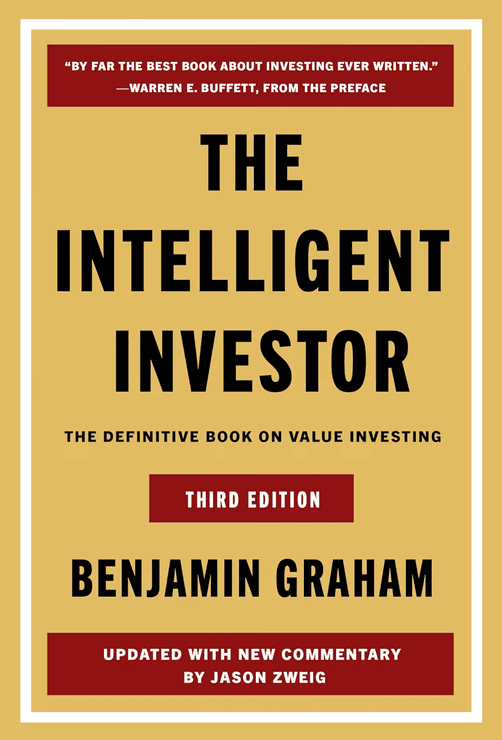
Benjamin Graham & Jason Zweig
$13.94 Listed priceThere are thousands of books about making money in the stock market.
However, relatively few spend as much time teaching you how to avoid losing it as Benjamin Graham’s The Intelligent Investor.
Originally published in 1949, this investing classic helped establish the principles of value investing and influenced generations of investors, including Warren Buffett.
The updated 75th Anniversary Edition features new commentary from financial journalist Jason Zweig, along with an introduction and appendix by Buffett.
But is a book originally written more than 75 years ago still relevant to modern traders and investors?
And is it worth reading if you’re more interested in charts, earnings reports, and active trading than traditional value investing?
Here’s what I learned from reading The Intelligent Investor, what I liked, and where I think it shows its age.
The Intelligent Investor – Key Stats
The Intelligent Investor
75th Anniversary Edition: October 22, 2024
Author: Benjamin Graham
Commentary: Jason Zweig
Additional contributions: Warren Buffett
Publisher: Harper Business
Pages: 640
Format: Hardcover
ISBN-13: 9780063356726
What You’ll Learn
- Value investing: Identifying companies trading below their estimated intrinsic value.
- Margin of safety: Protecting your capital by accounting for uncertainty and valuation errors.
- Fundamental analysis: Understanding earnings, financial statements, and company valuations.
- Market psychology: Recognizing emotional investing and avoiding impulsive decisions.
- Long-term wealth: Developing disciplined investment strategies rather than chasing market hype.
✓ Pros
- Foundational value-investing principles
- Excellent lessons in financial analysis
- Emphasizes capital preservation
- Updated commentary adds modern context
- Useful for developing investing discipline
✕ Cons
- Quite accounting-heavy for beginners
- Some historical examples feel outdated
- Dense writing requires patience
- Limited practical day-trading instruction
- Not a technical analysis handbook
An accounting-heavy read that definitely shows its age, but Graham’s lessons about recognizing overvalued and undervalued stocks remain relevant. It’s particularly useful for traders and investors who want to develop a better understanding of the businesses behind their charts.
*Ratings are snapshots and may change. Price and edition are subject to availability. As an Amazon Associate, PTJ earns from qualifying purchases.
What is The Intelligent Investor actually about?
At its core, The Intelligent Investor teaches you to think like a business owner rather than somebody placing bets on the stock market.
Graham’s philosophy is relatively straightforward: estimate what a company is actually worth, compare that valuation to its current share price, and look for opportunities to purchase stocks at a meaningful discount to their intrinsic value.
The difficult part is determining that value.
4 Foundational Principles of The Intelligent Investor
Benjamin Graham introduces four essential concepts that can help investors evaluate stocks, manage risk, and make more disciplined decisions.
Margin of Safety
Buy securities sufficiently below their estimated intrinsic value to provide a buffer against analytical mistakes and unexpected developments.
Mr. Market
Think of the stock market as an emotional business partner who offers to buy or sell shares at different prices every day. You don’t have to accept every offer.
Investing vs. Speculation
Understand the difference between purchasing an asset based on careful financial analysis and betting on future price movements.
Defensive vs. Enterprising Investing
Recognize that different investors have different amounts of time, knowledge, and willingness to research individual companies.
These concepts are especially useful when market volatility, breaking news, and earnings announcements cause investors to overreact.
Importantly, Graham isn’t promising that purchasing undervalued stocks will guarantee profits. His philosophy is about improving the odds of making sound long-term investment decisions while managing the possibility of being wrong.
Benjamin Graham & Jason Zweig
$13.94 Listed priceMy personal experience reading The Intelligent Investor
I’ll admit something right away. This is not the most entertaining investing book I’ve ever read.
In fact, it’s pretty accounting-heavy.
Graham spends considerable time discussing financial statements, earnings, bonds, balance sheets, and historical investment examples. Some of the language and market references feel noticeably dated, which makes sense considering the original book was written in 1949.
If you’re expecting an exciting introduction to stock trading, candlestick charts, and finding explosive momentum stocks, this probably isn’t the book you’re looking for.
However, I think the underlying lessons are valuable precisely because they encourage you to examine what you’re actually purchasing.
How profitable is the business? How much debt does it carry? Are earnings growing? And, perhaps most importantly, how much are you paying for those earnings?
These are questions that are just as relevant today as they were when Graham originally published the book.
Jason Zweig’s updated chapter-by-chapter commentary is particularly helpful because it provides more contemporary context for Graham’s original material without replacing it.
An investing classic for less than the cost of a bad trade
Learn how to recognize undervalued stocks, understand financial statements, and make more disciplined investment decisions.
- Understand the margin of safety
- Learn the fundamentals of value investing
- Develop a more disciplined investing mindset
Amazon affiliate link. Confirm the edition and current price before purchasing.
Why should day traders read a book about long-term investing?
Here’s where I think Graham’s philosophy becomes particularly interesting for active traders.
We spend enormous amounts of time analyzing price movements, identifying setups, researching earnings catalysts, and calculating potential profits.
However, understanding the businesses behind those charts can add another dimension to our research.
Consider a stock that rallies 20% immediately following its quarterly earnings announcement.
Is the company growing rapidly? Did earnings genuinely improve? Has its valuation already priced in several years of future growth? Or are traders simply chasing momentum?
Graham’s approach encourages us to look beyond the price movement and understand the underlying business.
Of course, an undervalued stock can continue declining, just as an expensive stock can keep climbing.
Fundamental valuation is NOT an intraday timing indicator, and Graham’s methods aren’t a substitute for a properly tested trading strategy.
But understanding valuation helps distinguish a potentially attractive long-term investment from a short-term speculative opportunity.
Reading books is cheaper than learning every lesson through losses
One of the biggest mistakes beginners make is putting substantial money into the stock market before developing a basic understanding of investing, risk management, and financial analysis.
Think about it.
A new trader might hesitate to spend $13.94 on an investing book but have absolutely no problem opening a $5,000 position in a company whose balance sheet they’ve never examined.
A single poorly researched trade could cost hundreds of dollars. Even a relatively small 5% loss on that position would cost $250.
A book won’t magically prevent trading losses. However, learning from experienced investors can help you recognize common mistakes before making them yourself.
That’s why I think developing a habit of reading books about trading, investing, market psychology, and financial analysis is one of the most worthwhile investments a beginner can make.
The Pros and Cons of The Intelligent Investor
Benjamin Graham’s classic offers valuable lessons in fundamental analysis, valuation and investing discipline. However, it’s not necessarily an easy read, especially for beginners or active day traders.
✓ Pros
✓ Excellent introduction to value investing
Learn the fundamentals of buying stocks below their estimated intrinsic value.
✓ Emphasizes valuation and risk
Understand the importance of financial analysis, capital preservation and the margin of safety.
✓ Encourages disciplined decision-making
Develop the patience to recognize opportunities without chasing every market movement.
✓ Updated commentary from Jason Zweig
Modern explanations help readers apply Graham’s original principles to today’s financial markets.
✗ Cons
✗ Accounting-heavy and sometimes difficult to read
Financial statements, earnings calculations and dense explanations may overwhelm beginners.
✗ Several historical examples feel dated
Some references reflect the financial markets and investment environment of Graham’s era.
✗ Not designed for active day traders
Don’t expect lessons on technical analysis, momentum trading or intraday chart setups.
✗ Requires additional financial knowledge
Readers unfamiliar with accounting and fundamental analysis may need to research certain concepts.
It’s accounting-heavy, and some sections definitely show their age. However, Graham’s lessons about recognizing overvalued and undervalued stocks are still useful today. Understanding the businesses behind your charts can help you become a more knowledgeable trader and investor.
The Intelligent Investor
Learning about investing is a lot cheaper than making expensive mistakes in the market.
As an Amazon Associate, PTJ earns from qualifying purchases. Prices and availability may change.
Final thoughts: Is The Intelligent Investor worth reading?
I wouldn’t recommend The Intelligent Investor to somebody exclusively interested in learning technical analysis or developing an intraday trading strategy.
However, if you want to become a more knowledgeable investor, develop a better understanding of financial statements, and learn to recognize potentially overvalued or undervalued businesses, there’s plenty of value here.
It’s dense, occasionally outdated, and certainly not a page-turner.
But Graham’s lessons about valuation, the margin of safety, and controlling your emotions have remained relevant through multiple generations of financial markets.
It’s an accessible addition to an investing bookshelf, particularly for readers willing to work through its more technical chapters.
Remember, the goal isn’t to read one book and suddenly become profitable. It’s to keep building your knowledge, one book, one trade, and one data point at a time.
Invest in your knowledge before risking your capital.
The Intelligent Investor has been teaching investors about valuation, risk, and market psychology since 1949. Explore Benjamin Graham’s classic and discover why his principles are still studied today.
See the available formats, current price, and reader reviews on Amazon. Paid affiliate link.


If you want to go deeper:
- Explore the Trading Statistics Hub to understand how different sectors behave across market cycles
- Study real setups inside the Trade Reviews section
- Learn the framework behind high-probability setups in the Post-Earnings Momentum Strategy
This is how you turn raw market data into repeatable trading edge.


Leave a Reply