

Healthcare stock statistics reveal a powerful mix of defensive stability and catalyst-driven volatility, making the sector essential for investors and traders seeking consistent demand, strong margins, and high-impact earnings and regulatory-driven price movements.

Healthcare stock statistics show one of the clearest patterns in the market: consistent demand, high margins in pharma, extreme volatility in biotech, and steady growth in medical devices.
Whether you’re analyzing defensive sector rotation or looking for high-probability earnings trades, understanding healthcare stock statistics is critical.
Compared to more cyclical sectors like industrials or consumer discretionary, healthcare operates on a different axis—people need treatment regardless of economic conditions. That makes it one of the most structurally resilient sectors in the S&P 500.
Below, we explore virtually everything there is to know about the healthcare sector, the biggest names in the industry and how to approach trading and investing in healthcare stocks
Healthcare Sector Overview (Data-Driven Introduction)
Healthcare is one of the largest and fastest-growing industries globally.
- Global healthcare spending exceeds $10 trillion annually
- The U.S. accounts for ~40% of total global spending
- Long-term growth rate: ~5–7% CAGR
- Aging populations are driving demand across all segments
Unlike sectors like energy or financials, healthcare demand is structural, not cyclical. This makes it comparable to consumer staples in terms of defensive characteristics—but with higher innovation-driven upside.

👉 Trader insight: Healthcare often outperforms during macro uncertainty. When markets rotate out of risk (like tech), capital frequently flows into defensive sectors like healthcare and staples.
Key Healthcare Stock Statistics (2026)
- Healthcare represents ~13% of the S&P 500 market cap
- Global healthcare spending exceeds $10 trillion annually, projected to reach ~$15 trillion by 2030
- The U.S. accounts for ~40% of global healthcare spending and ~17–18% of GDP
- U.S. healthcare spending per capita is 2–3x higher than global averages
Pharmaceuticals
- Gross margins: 60–80%
- Operating margins: 20–40%
- Drug development cost: $1B–$2.6B per drug
- Timeline: 10–15 years to market
- Only ~10% of drugs entering trials are approved
- Blockbuster drugs generate $1B+ annually
Biotechnology
- Clinical trial failure rate: ~90%
- Stocks can move ±50–200%+ on FDA decisions
- Many companies generate little to no revenue
- Highly sensitive to interest rates and funding conditions
Medical Devices
- Global market size: $500B+
- Growth rate: 5–8% annually
- Strong recurring revenue (consumables, servicing, equipment)
Sector Behavior & Performance
- Healthcare beta: ~0.7–0.85 vs S&P 500 (lower volatility)
- Typical drawdowns: ~10–20% vs 30–60% in high-growth sectors during rate hikes
- Outperforms during recessions and high volatility periods
- Underperforms during strong bull markets led by growth stocks
ETF & Market Structure (XLV)
- Health Care Select Sector SPDR Fund AUM: $35B–$40B+
- Expense ratio: ~0.08%
- Holdings: ~60–65 companies
- Top 10 holdings: ~55–60% of the ETF
- Long-term returns: ~9–10% annualized
Macro & Interest Rate Sensitivity
- Less rate-sensitive than technology
- Biotech underperformance vs pharma in rising rate environments: ~10–25%+ gap
- Healthcare demand remains inelastic across economic cycles

👉 Trader insight: Healthcare combines low volatility at the sector level with extreme volatility at the subsector level, creating a unique mix of defensive stability (pharma/devices) and high-risk, high-reward opportunities (biotech)—ideal for selective, catalyst-driven trading.
What Are Healthcare Stocks?
Healthcare stocks are typically divided into three major segments:
- Pharmaceuticals (large-cap drug makers like Pfizer and Johnson & Johnson)
- Biotechnology (early-stage, high-risk drug developers)
- Medical devices (equipment, diagnostics, surgical tools)
Each segment behaves differently in the market. For example, pharma companies generate consistent cash flow through patented drugs. Biotech companies often operate with no revenue and binary outcomes. And medical device companies sit in the middle—offering stable growth with recurring revenue models.
👉 Trader insight: Not all “healthcare stocks” move the same. Treat biotech earnings trades very differently from pharma or device companies.
What Is XLV? – State Street’s Health Care Select Sector SPDR Fund?
The Health Care Select Sector SPDR Fund is the primary ETF used to track the healthcare sector within the S&P 500. It holds large-cap U.S. healthcare companies across pharmaceuticals, biotech, medical devices, and healthcare services.

Launched in 1998, XLV is one of the most widely traded sector ETFs and is commonly used by traders and institutions to gain exposure to healthcare or hedge sector-specific risk.
- Assets under management: ~$40B+
- Number of holdings: ~60–65 companies
- Expense ratio: ~0.08%
- Dividend yield: ~1.5%–1.7%
- Top 10 holdings concentration: ~58–59%
Because XLV is market-cap weighted, a handful of mega-cap names (like Eli Lilly and Johnson & Johnson) heavily influence its movement.
👉 Trader insight: XLV doesn’t move like “average healthcare.” It moves like its top 5 holdings. If those names break structure, XLV follows.
XLV Historical Returns
XLV has delivered strong, consistent long-term returns, similar to the broader market—but with lower volatility.
- ~10% annualized return over ~30 years
- ~9.6–9.8% annualized over the past 10 years
- ~+14.5% in 2025
- ~+26% in 2021 (post-COVID recovery)
- Max drawdown: ~-35% to -37% historically
Over long periods, XLV has shown:
- Consistent compounding
- Lower drawdowns than growth sectors like tech
- Strong performance during defensive rotations
👉 Trader insight: XLV trends are typically cleaner and more sustained than high-beta sectors like technology or finance—making it useful for swing trades and macro positioning.
XLV Top Holdings (Approximate Weights)

XLV is top-heavy, with a large portion of the fund concentrated in a few companies:
- Eli Lilly (LLY): ~14%
- Johnson & Johnson (JNJ): ~10–11%
- AbbVie (ABBV): ~7%
- Merck & Co. (MRK): ~5–6%
- UnitedHealth Group (UNH): ~5%
Top 10 holdings account for ~60% of the entire ETF.
👉 Trader insight: If you’re trading XLV, you’re really trading LLY + JNJ + ABBV + MRK. Always check those charts before entering.
XLV Allocation by Industry
XLV provides broad exposure across healthcare, but it is still concentrated in key segments:
- Pharmaceuticals: largest weighting
- Healthcare providers & insurers
- Biotechnology
- Medical devices & equipment
State Street’s ETF tracks the healthcare portion of the S&P 500, meaning it only includes large-cap U.S. companies. There are also many other healthcare ETFs you can invest in, including:
- VHT → Best for broad exposure + long-term investing
- IYH → Alternative to XLV with slightly different weightings
- IBB → Large-cap biotech (less volatile than XBI)
- XBI → Small-cap biotech (highest volatility, biggest moves)
However, when we’re talking about XLV, an investment results in:
- High exposure to stable, profitable companies like LLY, JNJ, ABBV, MRK and UNH
- Limited exposure to small-cap/high-risk biotech
👉 Trader insight: XLV is less volatile than biotech ETFs because it excludes smaller, speculative names—making it a cleaner vehicle for sector-wide trades.
Pharmaceutical Industry Statistics
Pharmaceutical companies are widely considered the profit engine of the healthcare sector, driven by high-margin drugs, strong intellectual property protection, and global demand.
However, that profitability comes with long development timelines and significant risk. On average, it takes 10–15 years to bring a new drug to market, and only about 10% of drugs that enter clinical trials ultimately receive approval.
Despite these challenges, successful “blockbuster” drugs can generate over $1 billion annually, supporting gross margins of 60–80% and operating margins between 20–40%.

One of the biggest structural risks in pharma is the patent cliff.
When a drug loses exclusivity, generic competition can rapidly erode revenue, often leading to sharp declines in company earnings.
A clear example of this dynamic can be seen with Pfizer, which experienced a surge in revenue during the COVID-19 pandemic, followed by a normalization period as demand declined.
👉 Trader insight: Earnings reactions in pharmaceutical stocks are often driven more by forward guidance and pipeline updates than headline revenue or earnings beats.
Biotech Industry Statistics
Biotechnology is one of the most volatile and high-risk segments of the healthcare sector, driven almost entirely by binary outcomes and catalyst-driven events.
Unlike pharmaceutical companies, many biotech firms operate with little to no revenue, relying instead on funding and investor capital while they develop experimental treatments.
The odds are steep—approximately 90% of clinical trials fail, meaning only a small fraction of drugs ever reach commercialization.
However, when breakthroughs do occur, the upside can be massive, with stocks frequently moving ±50% to 200% or more on major FDA decisions or clinical trial results.
Because of this structure, biotech companies depend heavily on funding rounds, trial outcomes, and regulatory approvals to sustain operations and drive valuation.
This makes the sector even more volatile than technology stocks, as price movements are often tied to single events rather than gradual financial performance trends.
👉 Trader insight: Biotech setups can resemble perfect momentum trades on the surface, but they carry significant risk of sudden reversals. Treat them strictly as high-risk, catalyst-driven trades, not standard trend setups.
Medical Device Industry Statistics
Medical device companies are often considered the steady compounders of the healthcare sector, offering a balance between growth and stability.
The global medical device market is valued at over $500 billion and continues to grow at a consistent 5–8% annually, supported by aging populations, rising surgical demand, and ongoing innovation in diagnostics and treatment technologies.
Unlike biotech firms, many device companies benefit from recurring revenue streams, including consumables, maintenance, and servicing contracts tied to their equipment.
This segment includes major players such as Abbott Laboratories (ABT), Intuitive Surgical (ISRG), GE HealthCare (GEHC), TransMedics Group (TMDX), and Boston Scientific (BSX).

These companies operate across areas like surgical robotics, diagnostics, cardiovascular devices, and transplant technology—often with strong competitive moats due to specialized products and long-term hospital relationships.
Medical device companies also benefit from lower regulatory risk compared to biotech, more predictable demand, and high switching costs within hospital systems, where replacing equipment or retraining staff can be costly and disruptive.
This leads to more stable revenue and earnings profiles over time, especially when compared to biotech companies.
👉 Trader insight: Device companies tend to produce cleaner, more consistent earnings trends, making them more reliable candidates for post-earnings momentum setups compared to the more volatile biotech segment.
Healthcare Sector Performance Vs Other Sectors
Healthcare is widely recognized as a defensive sector, sharing many characteristics with consumer staples. Because demand for healthcare services is largely inelastic, the sector tends to hold up well during periods of economic uncertainty.
Historically, healthcare stocks have outperformed during recessions and market volatility, as investors rotate into more stable, necessity-driven industries.
However, during strong bull markets—especially those led by high-growth sectors like technology—healthcare often underperforms as capital shifts toward higher-risk, higher-reward opportunities.

A commonly used benchmark for tracking the sector is the Health Care Select Sector SPDR Fund, which provides exposure to large-cap healthcare companies within the S&P 500.
Compared to more cyclical sectors like basic materials, healthcare offers greater stability and more consistent earnings, but typically lacks the same level of explosive upside during economic expansions.
👉 Trader insight: Sector rotation is critical. When market volatility rises and during market corrections (often reflected by a rising VIX), capital tends to rotate into defensive sectors like healthcare—creating more stable, trend-driven opportunities.
Healthcare Stocks Vs Interest Rates
Healthcare stocks behave differently than most sectors because their performance is driven more by demand stability and cash flow resilience than purely macroeconomic conditions.
While interest rates still matter, the impact varies significantly across subsectors—and the data makes that clear. Historically, healthcare has shown lower sensitivity to interest rates than growth-heavy sectors like technology.
Over the past two decades, the healthcare sector has maintained a beta of ~0.7–0.85 vs the S&P 500, indicating lower overall volatility and reduced macro sensitivity.

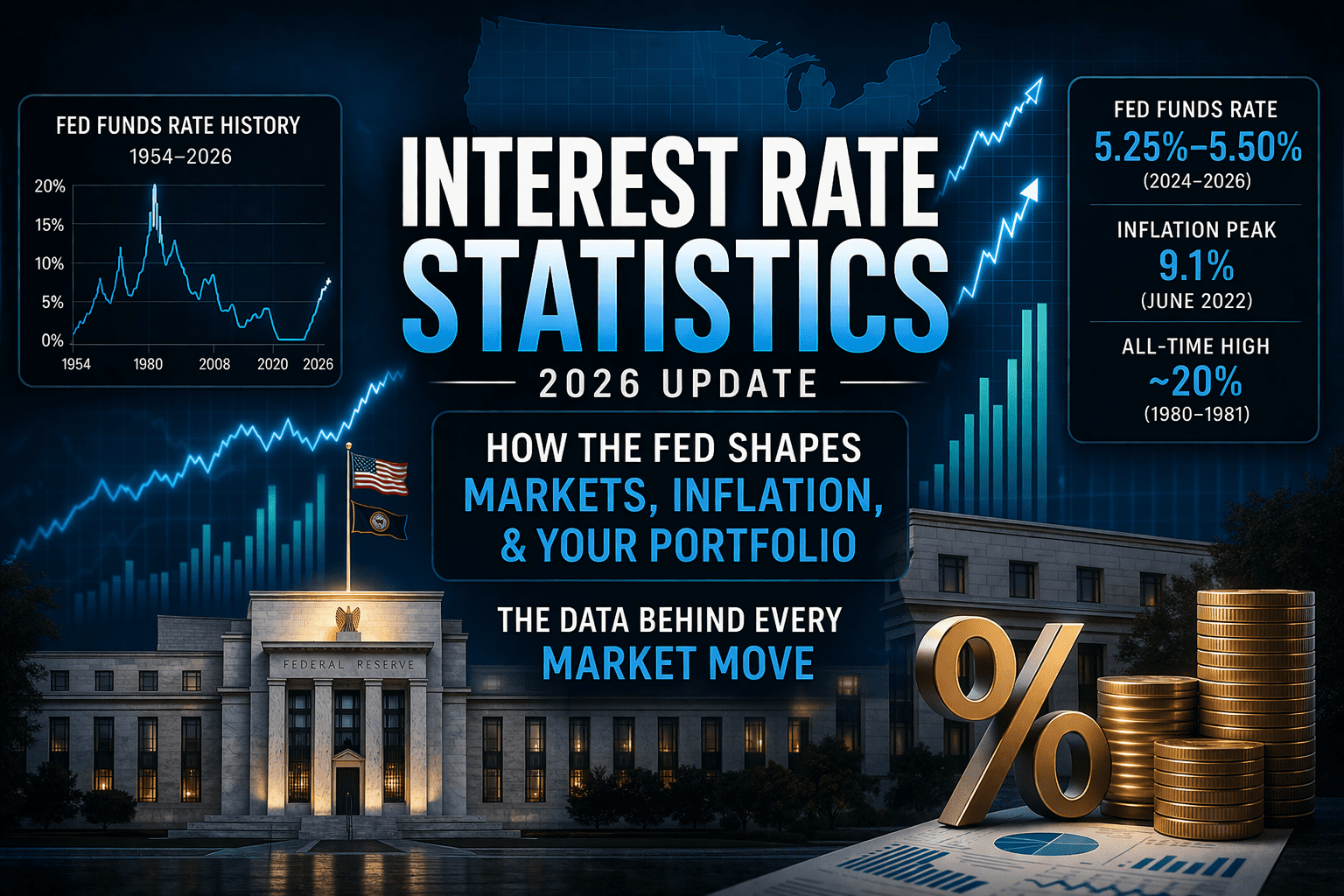
During the 2022–2023 rate hiking cycle—when the Federal Reserve raised rates from near 0% to over 5%—many high-growth tech stocks declined 30–60%, while healthcare ETFs like Health Care Select Sector SPDR Fund saw significantly smaller drawdowns in the ~10–20% range.
One of the key reasons is that healthcare demand is largely inelastic.
U.S. healthcare spending consistently accounts for ~17–18% of GDP, and that figure has remained stable regardless of interest rate cycles. That means nearly 1 in every 5 dollars in the U.S. economy goes to healthcare.
This creates a strong baseline of revenue for large-cap pharmaceutical companies, insurers, and medical device firms.
However, not all healthcare stocks react the same way. Biotech is far more sensitive to interest rates due to its reliance on future cash flows and external funding. When rates rise:
- Discount rates increase → valuations compress
- Capital becomes more expensive → fewer funding rounds
- Early-stage companies face higher dilution risk
Data supports this divergence. During rising rate environments, biotech indices often underperform broader healthcare by 10–25%+, while profitable pharma companies remain relatively stable.
In contrast, when rates fall or liquidity increases, biotech can dramatically outperform due to renewed risk appetite and capital inflows.
This creates a split within the sector:
- Large-cap pharma & insurers → defensive, cash-flow driven
- Biotech → rate-sensitive, growth-driven

👉 Trader insight: Rising rates tend to compress biotech valuations first, often before broader healthcare weakness appears. In contrast, rate cuts or liquidity expansions can trigger outsized biotech rallies, making it one of the most reactive segments for macro-driven trades.
Key Risks in Healthcare Stocks
Unlike buying treasury bonds, investing in healthcare isn’t risk-free. Major risks include:
- Regulatory pressure (drug pricing laws)
- Patent expirations
- Clinical trial failures
- Litigation risks
- Political risk (especially in U.S. elections)
Compared to sectors like financials, healthcare risk is less tied to macro cycles and more tied to regulation and innovation cycles.
Key Benefits of Healthcare Stocks
- Inelastic demand: Healthcare spending remains stable (~17–18% of U.S. GDP) regardless of economic conditions
- Defensive performance: Often outperforms sectors like industrials and consumer discretionary during downturns
- High profitability: Pharma companies generate 60–80% gross margins
- Long-term growth: Global healthcare spending projected to reach $15T by 2030
- Innovation upside: Biotech and medical tech can deliver outsized returns
- Diversification: Less tied to interest rates than
👉 Trader insight: Combines defensive stability with catalyst-driven upside
Trader Takeaway – Healthcare Stock Statistics 2026
Healthcare is one of the most statistically reliable sectors for trading, driven by frequent catalyst events and consistent volatility patterns across earnings and regulatory cycles.
- Healthcare earnings regularly produce 5–15%+ moves, with biotech names often exceeding 20–50% on FDA decisions
- Pharma and large-cap healthcare companies show more stable post-earnings trends, with lower failure rates than high-growth sectors
- Biotech stocks experience ~90% clinical failure rates, contributing to extreme upside/downside volatility
- Medical device companies grow at ~5–8% annually, often producing cleaner, more predictable price action
The highest-probability setups tend to come from clear, data-backed catalysts:
- Earnings reports with guidance revisions or pipeline updates
- FDA approvals/rejections (binary events with outsized moves)
- Revenue surprises tied to blockbuster drugs ($1B+ annual sales)
👉 Trader insight: Healthcare frequently meets post-earnings momentum criteria, but the edge comes from selectivity—the best trades occur when strong fundamentals align with clean technical breaks and high-volume moves, but only when the move is clean and supported by fundamentals.
If you want to go deeper:
- Explore the Trading Statistics Hub to understand how different sectors behave across market cycles
- Study real setups inside the Trade Reviews section
- Learn the framework behind high-probability setups in the Post-Earnings Momentum Strategy
This is how you turn raw market data into repeatable trading edge.
FAQ: Healthcare Stock Statistics
What are healthcare stock statistics?
Healthcare stock statistics refer to key data points—like margins, growth rates, volatility, and sector performance—that help investors understand how pharmaceutical, biotech, and medical device companies behave in the market.
Are healthcare stocks a good investment?
Healthcare stocks are considered strong long-term investments due to inelastic demand, high margins (60–80% in pharma), and consistent global growth, with spending projected to reach $15 trillion by 2030.
Why are biotech stocks so volatile?
Biotech stocks are highly volatile because ~90% of clinical trials fail, and valuations often depend on binary events like FDA approvals, which can cause ±50–200% price moves.
What is the difference between pharma, biotech, and medical device stocks?
- Pharma: High margins, stable cash flow, driven by drug sales
- Biotech: High risk, high reward, driven by clinical trials
- Medical devices: Steady growth (5–8% annually), recurring revenue
How big is the healthcare sector?
Healthcare represents ~13% of the S&P 500 and over $10 trillion in global spending annually, making it one of the largest sectors in the global economy.
Do healthcare stocks perform well during recessions?
Yes. Healthcare is a defensive sector that historically outperforms during recessions due to consistent demand, unlike cyclical sectors like industrials or consumer discretionary.
How do interest rates affect healthcare stocks?
Healthcare is less sensitive to rates than tech, but biotech is more affected due to reliance on future cash flows. Rising rates typically pressure biotech more than large-cap pharma.
What is XLV and why is it important?
The Health Care Select Sector SPDR Fund is the most widely used healthcare ETF, tracking large-cap healthcare companies and serving as a benchmark for sector performance.
What are the biggest risks in healthcare stocks?
Key risks include:
- Patent expirations
- Regulatory pressure
- Clinical trial failures
- Political risk (drug pricing policies)
What makes healthcare stocks attractive to traders?
Healthcare stocks offer frequent catalyst-driven opportunities, including earnings reports, FDA decisions, and drug pipeline updates—often leading to 5–20%+ moves.
How much of the U.S. economy is healthcare?
Healthcare accounts for ~17–18% of U.S. GDP, making it one of the largest and most stable components of the economy.
What are the best healthcare ETFs?
Top healthcare ETFs include:
- Health Care Select Sector SPDR Fund
- Vanguard Health Care ETF
- iShares Biotechnology ETF
Sources & References
Centers for Medicare & Medicaid Services. (2024). National health expenditure data: Historical and projections tables. https://www.cms.gov/data-research/statistics-trends-and-reports/national-health-expenditure-data/nhe-fact-sheet
Centers for Medicare & Medicaid Services. (2024). U.S. health spending as a share of GDP. https://www.cms.gov/data-research/statistics-trends-and-reports/national-health-expenditure-data
IQVIA Institute for Human Data Science. (2023). The global use of medicines 2023: Outlook to 2027. https://www.iqvia.com/insights/the-iqvia-institute/reports-and-publications/reports/the-global-use-of-medicines-2023
Evaluate Pharma. (2023). World preview 2023, outlook to 2030. https://www.evaluate.com/thought-leadership/pharma/evaluatepharma-world-preview-2023
U.S. Food and Drug Administration. (2024). Step 3: Clinical research. https://www.fda.gov/patients/drug-development-process/step-3-clinical-research
DiMasi, J. A., Grabowski, H. G., & Hansen, R. W. (2016). Innovation in the pharmaceutical industry: New estimates of R&D costs. Journal of Health Economics, 47, 20–33. https://doi.org/10.1016/j.jhealeco.2016.01.012
Statista. (2024). Healthcare expenditure worldwide from 2010 to 2030. https://www.statista.com/statistics/236541/global-healthcare-expenditure
World Health Organization. (2024). Global health expenditure database. https://apps.who.int/nha/database
SPDR State Street Global Advisors. (2024). Health Care Select Sector SPDR Fund (XLV) overview and holdings. https://www.ssga.com/us/en/intermediary/etfs/funds/spdr-health-care-select-sector-etf-xlv
Yahoo Finance. (2025). Health Care Select Sector SPDR Fund (XLV) historical data and holdings. https://finance.yahoo.com/quote/XLV/
Macrotrends. (2024). Eli Lilly gross margin 2010–2024. https://www.macrotrends.net/stocks/charts/LLY/eli-lilly/gross-margin
Macrotrends. (2024). Pfizer gross margin 2010–2024. https://www.macrotrends.net/stocks/charts/PFE/pfizer/gross-margin
Macrotrends. (2024). Merck gross margin 2010–2024. https://www.macrotrends.net/stocks/charts/MRK/merck/gross-margin


Leave a Reply